Swami Vivekananda
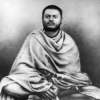
Swami Vivekananda
Swami VivekanandaBengali: , Shāmi Bibekānondo; 12 January 1863 – 4 July 1902), born Narendranath Datta, was an Indian Hindu monk, a chief disciple of the 19th-century Indian mystic Ramakrishna. He was a key figure in the introduction of the Indian philosophies of Vedanta and Yoga to the Western world and is credited with raising interfaith awareness, bringing Hinduism to the status of a major world religion during the late 19th century. He was a major force in the revival of Hinduism in...
NationalityIndian
ProfessionClergyman
Date of Birth12 January 1863
CountryIndia
You must also remember that the world has God to govern it, and He has not left it to our charity. The Lord God is its Governor and Maintainer, and in spite of these wine fanatics and cigar fanatics, and all sorts of marriage fanatics, it would go on. If all these persons were to die, it would go on none the worse.
What is meant by charity? Charity is not fundamental. It is really helping on the misery of the world, not eradicating it. One looks for name and fame and covers his efforts to obtain them with the enamel of charity and good works. He is working for himself under the pretext of working for others. Every so-called charity is an encouragement of the very evil it claims to operate against.
What good being object of charity? Give away, ne'er turn to ask in return, Should there be the wealth treasured in thy heart.
We see many persons talking the most wonderfully fine things about charity and about equality and the rights of other people and all that, but it is only in theory. I was so fortunate as to find one who was able to carry theory into practice. He had the most wonderful faculty of carrying everything into practice which he thought was right.
We may convert every house in the country into a charity asylum, we may fill the land with hospitals, but the misery of man will still continue to exist until man's character changes.
We hear all around us about practical religion, and analysing all that, we find that it can be brought down to one conception - charity to our fellow beings.
We have all been hearing from childhood of such things as love, peace, charity, equality, and universal brotherhood; but they have become to us mere words without meaning, words which we repeat like parrots, and it has become quite natural for us to do so. We cannot help it.
Those who are acquainted with the literature of India will remember a beautiful old story about this extreme charity, how a whole family, as related in the Mahâbhârata, starved themselves to death and gave their last meal to a beggar. This is not an exaggeration, for such things still happen.
There is another way in which this idea of mercy and selfless charity can be put into practice; that is, by looking upon work as "worship" in case we believe in a Personal God. Here we give up all the fruits our work unto the Lord, and worshipping Him thus, we have no right to expect anything from man kind for the work we do.
The Jivanmukta ('the living free' or one who knows) alone is able to give real love, real charity, real truth, and it is truth alone that makes us free.
The guiding motive of mankind should be charity towards men, charity towards all animals.
Seek no praise, no reward, for anything you do. No sooner do we perform a good action than we begin to desire credit for it. No sooner do we give money to some charity than we want to see our names blazoned in the papers. Misery must come as the result of such desires.
Religion has become to many merely a means of doing a little charity work, just to amuse them after a hard day's labour - they get five minutes religion to amuse them. This is the danger with the liberal thought.
No civilisation can grow unless fanatics, bloodshed, and brutality stop. No civilisation can begin to lift up its head until we look charitably upon one another; and the first step towards that much-needed charity is to look charitably and kindly upon the religious convictions of others. Nay more, to understand that not only should we be charitable, but positively helpful to each other, however different our religious ideas and convictions may be.