Swami Vivekananda
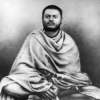
Swami Vivekananda
Swami VivekanandaBengali: , Shāmi Bibekānondo; 12 January 1863 – 4 July 1902), born Narendranath Datta, was an Indian Hindu monk, a chief disciple of the 19th-century Indian mystic Ramakrishna. He was a key figure in the introduction of the Indian philosophies of Vedanta and Yoga to the Western world and is credited with raising interfaith awareness, bringing Hinduism to the status of a major world religion during the late 19th century. He was a major force in the revival of Hinduism in...
NationalityIndian
ProfessionClergyman
Date of Birth12 January 1863
CountryIndia
Both the forces of good and evil will keep the universe alive for us, until we awake from our dreams and give up this building of mud pies.
Bless people when they revile you. Think how much good they are doing by helping to stamp out the false ego. Hold fast to the real Self. Think only pure thoughts, and you will accomplish more than a regiment of mere preachers. Out of purity and silence comes the word of power.
Always discriminate-your body, your house, the people and the world are all absolutely unreal like a dream. Always think that the body is only an inert instrument. And the Atman within is your real nature.
All is the Self or Brahman. The saint, the sinner, the lamb, the tiger, even the murderer, as far as they have any reality, can be nothing else, because there is nothing else.
Seek ye first the kingdom of God, and everything shall be added unto you. This is the one great duty, this is renunciation. Live for an ideal, and leave no place in the mind for anything else. Let us put forth all our energies to acquire that which never fails-our spiritual perfection. If we have true yearning for realization, we must struggle, and through struggle growth will come. We shall make mistakes, but they may be angels unawares.
I am the thread that runs through all these pearls, and each pearl is a religion or even a sect thereof. Such are the different pearls, and God is the thread that runs through all of them; most people, however, are entirely unconscious of it.
Jnana, bhakti, yoga and karma - these are the four paths which lead to spiritual freedom. One must follow the path for which one is best suited. But in this age, special stress should be laid on karma yoga.
Where is fate and who is fate? We reap what we sow. We are the makers of our own fate. None else has the blame, none else has the praise. We make our own destiny. The Christian is not to become a Hindu or a Buddhist, nor a Hindu or a Buddhist to become a Christian. Each must assimilate the spirit of other religion and yet preserve his individuality and follow his own law of growth.
Expansion is life. Love is expansion. Love is therefore the only law of life.
All the work you do, is done for your own salvation, is done for your own benefit.
The more you think of yourself as shining immortal spirit, the more eager you will be to be absolutely free of matter, body, and senses. This is the intense desire to be free.
The test of ahimsa is the absence of jealousy. The man whose heart never cherishes even the thought of injury to anyone, who rejoices at the prosperity of even his greatest enemy, that man is the bhakta, he is the yogi, he is the guru of all.
That truth which you swallow from others will not be yours...you have to realize truth and work it our for yourself according to your own nature...All must struggle to be individuals-strong, standing on your own feet, thinking your own thoughts, realizing you own Self. No use swallowing doctrines others pass on-standing up together like soldiers in jail, sitting down together, all eating the same food, all nodding their heads at the same time. Variation is the sign of life. Sameness is the sign of death.
As soon as a man stands up and says he is right or his church is right, and all others are wrong, he is himself all wrong. He does not know that upon the proof of all the others depends the proof of his own. Love and charity for the whole human race, that is the test of true religiousness. I do not mean the sentimental statement that all men are brothers, but that one must feel the oneness of human life.