Swami Vivekananda
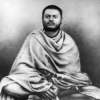
Swami Vivekananda
Swami VivekanandaBengali: , Shāmi Bibekānondo; 12 January 1863 – 4 July 1902), born Narendranath Datta, was an Indian Hindu monk, a chief disciple of the 19th-century Indian mystic Ramakrishna. He was a key figure in the introduction of the Indian philosophies of Vedanta and Yoga to the Western world and is credited with raising interfaith awareness, bringing Hinduism to the status of a major world religion during the late 19th century. He was a major force in the revival of Hinduism in...
NationalityIndian
ProfessionClergyman
Date of Birth12 January 1863
CountryIndia
Blows are what awaken us & help to break the dream. They show us the insufficiency of this world & make us long to escape, to have freedom.
Impurity is a mere superimposition under which your real nature has become hidden. But the real you is already perfect, already strong.
Every individual is a center for the manifestation of a certain force. This force has been stored up as the resultant of our previous works, and each one of us is born with this force at our back.
The less passion there is, the better we work. The calmer we are the better for us and the more the amount of work we can do.
This is the great lesson that we are here to learn through myriads of births and heavens and hells-that there is nothing to be asked for, desired for, beyond one's spiritual Self (atman).
The Land where humanity has attained its highest towards gentleness, towards generosity, towards purity, towards calmness - it is India.
You cannot take away one atom of matter or one foot-pound of force. You cannot add to the universe one atom of matter or one foot-pound of force. As such, evolution does not come out of zero; then, where does it come from? From previous involution.
Though an atom is invisible, unthinkable, yet in it are the whole power and potency of the universe.
This world, this universe which our senses feel, or our mind thinks, is but one atom, so to say, of the Infinite, projected on to the plane of consciousness; and within that narrow limit, defined by the network of consciousness, works our reason, and not beyond. Therefore, there must be some other instrument to take us beyond, and that instrument is called inspiration.
The atom cannot disobey the law. Whether it is the mental or the physical atom, it must obey the law. "What is the use of [external restraint]?"
Out of this idea of separation between atom and atom comes all misery.
Not one atom can rest until it finds its freedom.
Every one is struggling for freedom-from the atom to the star. The ignorant man is satisfied if he can get freedom within a certain limit-if he can get rid of the bondage of hunger or of being thirsty. But that sage feels that there is a stronger bondage which has to be thrown off. He would not consider the freedom of the Red Indian as freedom at all.
Every atom is working and resisting every thought in the mind. Everything we see and know is but the resultant of these two forces.