Tariq Ramadan
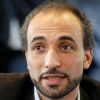
Tariq Ramadan
Tariq Ramadanis a Swiss academic, philosopher and writer. He is the professor of Contemporary Islamic Studies in the Faculty of Oriental Studies at St Antony's College, Oxford and also teaches at the Oxford Faculty of Theology. He is a visiting professor at the Faculty of Islamic Studies, the Université Mundiapolisand several other universities around world. He is also a senior research fellow at Doshisha University. He is the director of the Research Centre of Islamic Legislation and Ethics, based in...
NationalitySwiss
ProfessionWriter
Date of Birth26 August 1962
CountrySwitzerland
The fact that Western Muslims are free means that they can have enormous impact. But it would be wrong to claim that we are imposing our ways on the West. New ideas are now coming from the West. To be traditional is not so much a question of protecting ourselves as to be traditionalist in principle.
It is of the highest importance to provide equal access to the labour market. Governments should act to establish equitable employment standards and penalise racial discrimination.
In the name of the rule of law, democracy and human rights, we cannot accept that the rights of individuals (Arab or Muslim) be trampled upon, or that populations are targeted and discriminated against in the name of the war against terrorism.
The great majority of Americans do not know much about Islam but nonetheless fear it as violent, expansionist and alien to their society. The problem to overcome is not hatred, but ignorance.
It's clear there is nothing in my record supporting terrorism.
In sha Allah, God willing, must be the expression of humility of the active actors and it must never be the justification of the passive observers
My experience of living with people of diverse religions and cultures taught me that one will never be at peace with the other if one is at war with oneself.
I focus on Islamic applied ethics in many fields, and here I am saying that coming back to the Qu'ran and the sunnah as our reference point does not mean that we depend for our ethics on 'Islam as opposed to the others'.
We have to reconcile ourselves with philosophical questions in every field. Every field should be open to inquiry and knowledge.
The month of Ramadan is the world's most widespread fast and yet its teachings are minimised, neglected and even betrayed (through literal application of rules that overlooks their ultimate objective).
The diversity is the risk of war, the necessity of diversity is mutual respect
When I go back to the Quran I see that the context of Revelation is creation in its entirety. The universe is a Revelation and this of course includes nature, plants and animals. In other words, what is coming from the Quran as rules and objectives are set within the larger scheme of the universe and nature as part of Creation.
Religious symbols should be visible in public space, in a dignified and non-provocative manner. Christmas trees here, Jewish menorahs there and, further along, a minaret - these symbols represent human life in all its diversity.
The universality of Islam is not uniformity, it is unity with diversity.