Theodore Zeldin
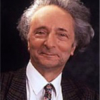
Theodore Zeldin
Theodore Zeldinis an Oxford scholar and thinker whose books have searched for answers to three questions. Where can a person look to find more inspiring ways of spending each day and each year? What ambitions remain unexplored, beyond happiness, prosperity, faith, love, technology or therapy? What role could there be for individuals with independent minds, or who feel isolated or different, or misfits? Each of Zeldin’s books illuminates from a different angle what people can do today that they...
NationalityEnglish
ProfessionPhilosopher
Date of Birth22 August 1933
People in this world of superficial communication find themselves isolated and lonely and have difficult in talking about personal things that really matter to them.
Two individuals, conversing honestly, can be inspired by the feeling that they are engaged in a joint enterprise, aiming at inventing an art which has not been tried before.
Everything I am going to say to you is the child of a conversation. [...] That is the aspect of conversation that particularly excites me: how conversation changes the way you see the world, and even changes the world.
The great thing about marriage is that it creates trust, the most precious of things.
We should strive to be employed in such a way that we don't realize that what we're doing is work.
Only when people learn to converse will they begin to be equal.
The past is what provides us with the building blocks. Our job today is to create new buildings out of them.
To idolise a person means you don't get to know them, and the idea that you can become one is a myth, and it also means that you don't need to talk to one another because you're the same person.
The institution of marriage, if you look at it over many centuries, has come and gone.
Conversation creates a new kind of network within organizations. Current networks are used for competitive advantage, but conversation is focused on encouraging people to realize their potential.
One of the great ambitions is to discover the diversity of the world, to discover who inhabits the world.
Change the way you think, and you are halfway to changing the world.
The violent have been victorious for most of history because they kindled the fear with which everyone is born.
The British have turned their sense of humour into a national virtue. It is odd, because through much of history, humour has been considered cheap, and laughter something for the lower orders. But British aristocrats didn't care a damn about what people thought of them, so they made humour acceptable.