Thom Mayne
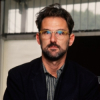
Thom Mayne
Thom Mayneis an American architect. He is based in Los Angeles. Mayne helped found the Southern California Institute of Architecturein 1972, where he is a trustee. Since then he has held teaching positions at SCI-Arc, the California State Polytechnic University, Pomona and the University of California, Los Angeles. He is principal of Morphosis, an architectural firm in Santa Monica, California. Mayne received the Pritzker Architecture Prize in March 2005...
NationalityAmerican
ProfessionArchitect
Date of Birth19 January 1944
CountryUnited States of America
The age of recalcitrance is over. The best solution is no longer just to regurgitate a 19th-century design.
New York is this cacophony - a collection of radical differences, an agreement of non sequiturs. The diversity and intensity are startling.
No matter what I've done, what I've tried to do, everybody says it can't be done. And it's continuous across the complete spectrum of the various kind of realities that you confront with your ideas.
Large-scale public projects require the agreement of large numbers of people.
For me the meaning of my work is much more fluid.
It's too simplistic to advance the notion of the autonomy of art as a reason for turning away from the public. You can have autonomy and simultaneously have connections with the social and political world.
I've learned that in order to achieve what I wanted, it made more sense to negotiate than to defend the autonomy of my work by pounding my fist on the table.
Art in progress. MAK has occupied a unique and valuable space as international host for discourse between the arts and architecture.
Look around at day-to-day life for ideas, and it finds its way into your work.
Scientific reality is the modern human condition, and you can see that in the symbolic nature of my work.
So I am totally aware that when I defend the autonomy of art I'm going counter to my own development. It's more an instinctive reaction, meant to protect the private aspect of the work, the part I am most interested in and which nowadays is at risk in our culture.
I've been such an outsider my whole life.
So at a time in which the media give the public everything it wants and desires, maybe art should adopt a much more aggressive attitude towards the public. I myself am very much inclined to take this position.
Our idea of nature is increasingly being determined by scientific developments. And they have become decisive for our image of reality.