Thomas Browne
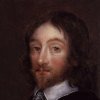
Thomas Browne
Sir Thomas Brownewas an English polymath and author of varied works which reveal his wide learning in diverse fields including science and medicine, religion and the esoteric. Browne's writings display a deep curiosity towards the natural world, influenced by the scientific revolution of Baconian enquiry. Browne's literary works are permeated by references to Classical and Biblical sources as well as the idiosyncrasies of his own personality. Although often described as suffering from melancholia, his writings are also characterised by wit...
NationalityBritish
ProfessionNovelist
Date of Birth19 October 1605
For my part, I have ever believed, and do now know, that there are witches.
I can hardly thinke there was any scared into Heaven; they go the surest way to Heaven who would serve God without a Hell; other Mercenaries, that crouch unto Him in feare of Hell, though they terme themselves servants, are indeed but the slaves of the Almighty.
To extend our memories by monuments, whose death we daily pray for, and whose duration we cannot hope, without injury to our expectations in the advent of the last day, were a contradiction to our belief.
Gold once out of the earth is no more due unto it; what was unreasonably committed to the ground, is reasonably resumed from it; let monuments and rich fabricks, not riches, adorn men's ashes.
There is nothing strictly immortal, but immortality. Whatever hath no beginning may be confident of no end.
Gravestones tell truth scarce forty years.
He that unburied lies wants not his hearse, For unto him a tomb's the Universe.
Natura nihil agit frustra [Nature does nothing in vain] is the only indisputible axiom in philosophy. There are no grotesques in nature; not any thing framed to fill up empty cantons, and unncecessary spaces.
A man may be in as just possession of the truth as of a city, and yet be forced to surrender.
I have tried if I could reach that great resolution . . . to be honest without a thought of Heaven or Hell.
For the world, I count it not an inn, but a hospital; and a place not to live, but to die in.
Obstinacy in a bad cause is but constancy in a good.
I am the happiest man alive. I have that in me that can convert poverty to riches, adversity to prosperity, and I am more invulnerable than Archilles; Fortune hath not one place to hit me.
Let age, not envy, draw wrinkles on thy cheeks.