Thomas Browne
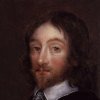
Thomas Browne
Sir Thomas Brownewas an English polymath and author of varied works which reveal his wide learning in diverse fields including science and medicine, religion and the esoteric. Browne's writings display a deep curiosity towards the natural world, influenced by the scientific revolution of Baconian enquiry. Browne's literary works are permeated by references to Classical and Biblical sources as well as the idiosyncrasies of his own personality. Although often described as suffering from melancholia, his writings are also characterised by wit...
NationalityBritish
ProfessionNovelist
Date of Birth19 October 1605
I love to lose myself in a mystery to pursue my reason to an O altitudo.
The heart of man is the place the devil dwells in; I feel sometimes a hell within myself.
Half our days we pass in the shadow of the earth; and the brother of death exacteth a third part of our lives.
I intend no Monopoly, but a Community in Learning; I study not for my own sake only, but for theirs that study not for themselves.
I believe the world grows near its end, yet is neither old nor decayed, nor will ever perish upon the ruins of its own principles.
Whosoever enjoys not this life, I count him but an apparition, though he wear about him the sensible affections of flesh. In these moral acceptions, the way to be immortal is to die daily.
They that endeavour to abolish vice destroy also virtue, for contraries, though they destroy one another, are yet the life of one another.
Light is the shadow of God.
Were the happiness of the next world is as closely apprehended as the felicities of this, it were a martyrdom to live.
Therefore for Spirits, I am so far from denying their existence that I could easily believe, that not only whole Countries, but particular persons, have their Tutelary and Guardian Angels.
If there be any among those common objects of hatred I do contemn and laugh at, it is that great enemy of reason, virtue, and religion, the multitude; that numerous piece of monstrosity, which, taken asunder, seem men, and the reasonable creatures of God, but, confused together, make but one great beast, and a monstrosity more prodigious than Hydra.
To call ourselves a Microcosme, or little world, I thought it onely a pleasant trope of Rhetorick, till my neare judgement and second thoughts told me there was a reall truth therein: for first wee are a rude masse, and in the ranke of creatures, which only are, and have a dull kinde of being not yet priviledged with life, or preferred to sense or reason; next we live the life of plants, the life of animals, the life of men, and at last the life of spirits, running on in one mysterious nature those five kinds of existence, which comprehend the creatures not onely of world, but of the Universe.
Thus there are two books from whence I collect my Divinity; besides that written one of God, another of his servant Nature, that universal and public Manuscript, that lies expans'd unto the eyes of all; those that never saw him in the one, have discovered him in the other.
Women do most delight in revenge.