Thomas Jefferson
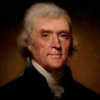
Thomas Jefferson
Thomas Jeffersonwas an American Founding Father who was the principal author of the Declaration of Independence. He was elected the second Vice President of the United States, serving under John Adams and in 1800 was elected the third President. Jefferson was a proponent of democracy, republicanism, and individual rights, which motivated American colonists to break from Great Britain and form a new nation. He produced formative documents and decisions at both the state and national level...
NationalityAmerican
ProfessionUS President
Date of Birth13 April 1743
CityShadwell, VA
CountryUnited States of America
The execution of the laws is more important than the making them
Of liberty I would say that, in the whole plenitude of its extent, it is unobstructed action according to our will. But rightful liberty is unobstructed action according to our will within limits drawn around us by the equal rights of others. I do not add 'within the limits of the law,' because law is often but the tyrant's will, and always so when it violates the right of an individual.
I have the consolation to reflect that during the period of my administration not a drop of the blood of a single fellow citizen was shed by the sword of war or of the law
I hope we shall take warning from the example of England and crush in its birth the aristocracy of our moneyed corporations which dare already to challenge our Government to trial, and bid defiance to the laws of our country
It is strangely absurd to suppose that a million human beings, collected together, are not under the same moral laws which bind each of them separately.
It is the trade of lawyers to question everything, yield nothing, and talk by the hour.
A strict observance of the written laws is doubtless one of the high virtues of a good citizen, but it is not the highest. The laws of necessity, of self-preservation, of saving our country when in danger, are of higher obligation.
the study of the law is useful in a variety of points of view. it qualifies a man to be useful to himself, to his neighbors, & to the public.
preach, my dear Sir, a crusade against ignorance; establish & improve the law for educating the common people.
Laws provide against injury from others; but not from ourselves.
I am increasingly persuaded that the earth belongs exclusively to the living and that one generation has no more right to bind another to it's laws and judgments than one independent nation has the right to command another.
Many are the exercises of power reserved to the States wherein a uniformity of proceeding would be advantageous to all. Such are quarantines, health laws, regulations of the press, banking institutions, training militia, etc., etc.
Although we are free by the law, we are not so in practice.
The President is bound to stop at the limits prescribed by our Constitution and law to the authorities in his hands, [and this] would apply in an occasion of peace as well as war.