Thomas Jefferson
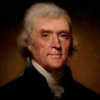
Thomas Jefferson
Thomas Jeffersonwas an American Founding Father who was the principal author of the Declaration of Independence. He was elected the second Vice President of the United States, serving under John Adams and in 1800 was elected the third President. Jefferson was a proponent of democracy, republicanism, and individual rights, which motivated American colonists to break from Great Britain and form a new nation. He produced formative documents and decisions at both the state and national level...
NationalityAmerican
ProfessionUS President
Date of Birth13 April 1743
CityShadwell, VA
CountryUnited States of America
My reading of history convinces me that most bad government results from too much government.
No religious reading, instruction or exercise, shall be prescribed or practiced [in the elementary schools] inconsistent with the tenets of any religious sect or denomination.
among the values of classical learning I estimate the Luxury of reading the Greek & Roman authors in all the beauties of their originals ... I think myself more indebted to my father for this, than for all the other luxuries his cares and affections have placed within my reach.
A lively and lasting sense of filial duty is more effectually impressed on the mind of a son or daughter by reading King Lear, than by all the dry volumes of ethics, and divinity that ever were written.
Some men look at Constitutions with sanctimonious reverence, and deem them, like the ark of the covenant, too sacred to be touched. They ascribe to the men of the preceding age a wisdom more than human, and suppose what they did to be beyond amendment. I knew that age well; I belonged to and labored with it. It deserved well of its country. It was very like the present, but without the experience of the present; and forty years of experience in Government is worth a century of book-reading; and this they would say themselves, were they to rise from the dead.
Required to be constantly recumbent I write slowly and with difficulty.... Weakened in body by infirmities and in mind by age, now far gone into my 83rd year, reading one newspaper only and forgetting immediately what I read.
Nothing is so engaging as the little domestic cares into which you appear to be entering, and as to reading it is useful for onlyfilling up the chinks of more useful and healthy occupations.
I really look with commiseration over the great body of my fellow citizens who, reading newspapers, live and die in the belief that they have known something of what has been passing in their times.
We generally learn languages for the benefit of reading the books written in them
The result of your fifty or sixty years of religious reading in the four words: 'Be just and good,' is that in which all our enquiries must end.
My religious reading has long been confined to the moral branch of religion, which is the same in all religions; while in that branch which consists of dogmas, all differ[.
I am not fully informed of the practices at Harvard, but there is one from which we shall certainly vary, although it has been copied, I believe, by nearly every college and academy in the United States. That is, the holding the students all to one prescribed course of reading, and disallowing exclusive application to those branches only which are to qualify them for the particular vocations to which they are destined. We shall, on the contrary, allow them uncontrolled choice in the lectures they shall choose to attend, and require elementary qualification only, and sufficient age.
Reading, reflection and time have convinced me that the interests of society require the observation of those moral precepts only in which all religions agree (for all forbid us to steal, murder, plunder, or bear false witness), and that we should not intermeddle with the particular dogmas in which all religions differ, and which are totally unconnected with morality.
From candlelight to early bedtime, I read.