Tristan Tzara
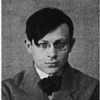
Tristan Tzara
Tristan Tzarawas a Romanian and French avant-garde poet, essayist and performance artist. Also active as a journalist, playwright, literary and art critic, composer and film director, he was known best for being one of the founders and central figures of the anti-establishment Dada movement. Under the influence of Adrian Maniu, the adolescent Tzara became interested in Symbolism and co-founded the magazine Simbolul with Ion Vineaand painter Marcel Janco. During World War I, after briefly collaborating on Vinea's Chemarea, he joined...
NationalityFrench
ProfessionPoet
Date of Birth16 April 1896
CountryFrance
Let us try for once not to be right.
Dada covers things with an artificial tenderness. It is snowing butterflies that have escaped from a prophet's head.
The rest, called literature, is a dossier of human imbecility for the guidance of future professors.
We have always made mistakes, but the greatest mistakes are the poems we have written.
I write a manifesto and I want nothing, yet I say certain things, and in principle I am against manifestoes, as I am also against principles.
Thought is made in the mouth.
Dada, a roaring of tense colors, and interlacing of opposites and of all contradictions, grotesques, inconsistencies: LIFE
The summit sings what is being spoken in the depths.
In principle, I am against principles.
Dada is not modern at all, it is rather a return to a quasi-Buddhist religion of indifference. Dada puts an artificial sweetness onto things, a snow of butterflies coming out of a conjurer's skull. Dada is stillness and does not understand the passions.
Everyone dances to his own personal boomboom.
To make a poem, take one newspaper, one pair of scissors, snip the words one by one and put them in a bag. Shake gently, draw them out at random, and copy them conscientiously... DADA est mort. DADA est idiot. Vive DADA!
You'll never know why you exist, but you'll always allow yourselves to be easily persuaded to take life seriously.
Any work of art that can be understood is the product of journalism. The rest, called literature, is a dossier of human imbecility for the guidance of future professors.