Tryon Edwards
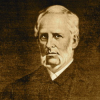
Tryon Edwards
Tryon Edwards was an American theologian, best known for compiling A Dictionary of Thoughts, a book of quotations. He published the works of Jonathan Edwardsin 1842. He also compiled and published the sixteen sermons of his great grandfather, Jonathan Edwards, on 1 Corinthians 13, the "Love Chapter", titling the book "Charity And Its Fruits; Christian love as manifested in the heart and life", which was thought by some to be the most thorough analysis of the text of 1 Corinthians...
NationalityAmerican
ProfessionTheologian
CountryUnited States of America
The first evil choice or act is linked to the second; and each one to the one that follows, both by the tendency of our evil nature and by the power of habit, which holds us as by a destiny
Sin with the multitude, and your responsibility and guilt are as great and as truly personal, as if you alone had done the wrong
Duty performed gives clearness and firmness to faith, and faith thus strengthened through duty becomes the more assured and satisfying to the soul.
Superstitions are, for the most part, but the shadows of great truths.
Some blame themselves to extort the praise of contradiction from others.
Some persons are exaggerators by temperament. They do not mean untruth, but their feelings are strong, and their imaginations vivid, so that their statements are largely discounted by those of calm judgment and cooler temperament. They do not realize that we always weaken what we exaggerate.
He that resolves upon any great and good end, has, by that very resolution, scaled the chief barrier to it. He will find such resolution removing difficulties, searching out or making means, giving courage for despondency, and strength for weakness, and like the star to the wise men of old, ever guiding him nearer and nearer to perfection.
The most we can get out of life is its discipline for ourselves, and its usefulness for others.
Let your holidays be associated with great public events, and they may be the life of patriotism as well as a source of relaxation and personal employment.
Attention to a subject depends upon our interest in it.
All things are ordered by God, but His providence takes in our free agency, as well as His own sovereignty.
A holy life is not an ascetic, or gloomy or solitary life, but a life regulated by divine truth and faithful in Christian duty. It is living above the world while we are still in it.
Unbelief, in distinction from disbelief, is a confession of ignorance where honest inquiry might easily find the truth. - "Agnostic" is but the Greek for "ignoramus."
My books are my tools, and the greater their variety and perfection the greater the help to my literary work.