Tyler Oakley
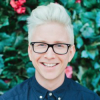
Tyler Oakley
Mathew Tyler Oakley, known as Tyler Oakley, is an American YouTube and podcast personality, humorist, author and activist. Much of Oakley's activism has been dedicated to LGBT youth, LGBT rights, as well as social issues including healthcare, education, and the prevention of suicide among LGBT youth. Oakley regularly posts material on various topics, including queer politics, pop culture and humor...
NationalityAmerican
ProfessionYouTube Star
Date of Birth22 March 1989
CityJackson, MI
CountryUnited States of America
People just want to watch people live their authentic lives and share the good and the bad. You can have fun and be a positive influence and have a good impact. And it can still be entertaining.
The moment I realised anyone could be watching - and this is going to sound so name-droppy - was when Ricky Martin reached out to me on Coming Out Day 2012. The Internet has this massive potential, and you can never know the effect you might have on others by just being yourself.
All the money that's donated to the Trevor Project provides resources that directly affect the youth that actually watch my videos. It's a cool thing to see them basically provide resources for each other.
I'm a genuine lover of music. I've always watched the Grammys from home.
I'm a casual watcher. I like to stream everything.
I think a lot of what I wanted to do in 2014 was build a repertoire or a portfolio for what I can do with traditional celebrities or with brands or whatever. Maybe 2015 is the year I start reaching out to people I always dreamed to do stuff with.
There are so many voices on YouTube, and there are incredible creators that are popular for a reason. And although it's great to be inspired by them, nobody is going to subscribe to a second-rate version of them. It's really important to put your best foot forward and be your best self because you will always be the number one version of you.
Look, nobody is born with a sociology degree, and no one can understand all perspectives. Nobody's going to get it all from the very start. But the Internet at least allows everyone to hear these perspectives at a much faster rate than if we had to do it without it.
With everything that I've done with YouTube and podcasts for so many years, it's been: you can record it, edit, and then upload that day. With the book and documentary, it's been such a longer process.
When I first thought about leaving the traditional route of a 9-to-5 career to pursue full-time YouTube, it was terrifying - not many people were doing it. The thought was I have to have money saved up, because this very likely might fail. From the start, I had to give it my all for it to work.
Writing is something I want to explore. If I were to do it, I would want it to be not a book made by a YouTuber; I would really want to respect that craft of literature and just be an author.
To me, what's really an important difference between traditional entertainment and digital - on YouTube specifically - is that people thrive when they're authentic about themselves.
When it came to 'Binge,' it wasn't my intention to get on a little soapbox and have a teaching moment. It was more, 'Here are things that have happened to me; here's what I've learned from it. If you'd like to learn from it too, great; if you just like the entertainment aspect, that's fine too.'
I found a vlogger named William Sledd who talked about his life - it was very minimal edits. It was one of those things where I discovered him, and I was like, 'Oh my God, I'm obsessed with him.' I felt like I was friends with him. And he was a huge inspiration for why I made my first video.