Victor Hugo
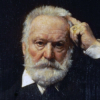
Victor Hugo
Victor Marie Hugo; 26 February 1802 – 22 May 1885) was a French poet, novelist, and dramatist of the Romantic movement. He is considered one of the greatest and best-known French writers. In France, Hugo's literary fame comes first from his poetry and then from his novels and his dramatic achievements. Among many volumes of poetry, Les Contemplations and La Légende des siècles stand particularly high in critical esteem. Outside France, his best-known works are the novels Les Misérables, 1862,...
NationalityFrench
ProfessionNovelist
Date of Birth26 February 1802
CityBesancon, France
CountryFrance
Progress is the life-style of man. The general life of the human race is called Progress, and so is its collective march. Progress advances, it makes the great human and earthly journey towards what is heavenly and divine; it has its pauses, when it rallies the stragglers, its stopping places when it meditates, contemplating some new and splendid promised land that has suddenly appeared on its horizon. It has its nights of slumber; and it is one of the poignant anxieties of the thinker to see the human spirit lost in shadow, and to grope in the darkness without being able to awake sleeping progress.
He caught her, she fell, he caught her in his arms, he held her tightly unconscious of what he was doing. He held her up, though tottering himself. He felt as if his head were filled with smoke; flashes of light slipped through his eyelids; his thoughts vanished; it seemed to him that he was performing a religious act, and that he was committing a profanation. Moreover, he did not feel one passionate desire for this ravishing woman, whose form he felt against his heart. He was lost in love.
Nothing is more dangerous than to stop working. It is a habit that can soon be lost, one that is easily neglected and hard to resume. A measure of day-dreaming is a good thing, like a drug prudently used ... But too much submerges and drowns. Woe to the intellectual worker who allows himself to lapse wholly from positive thinking into day-dreaming. He thinks he can easily change back, and tells himself that it is all one. He is wrong! To substitute day-dreaming for thought is to confuse poison with a source of nourishment.
The owl goes not into the nest of the lark.
To reform a man, you must begin with his grandmother
Verse in itself does not constitute poetry. Verse is only an elegant vestment for a beautiful form. Poetry can express itself in prose, but it does so more perfectly under the grace and majesty of verse. It is poetry of soul that inspires noble sentiments and noble actions as well as noble writings.
My childhood began, as everybody's childhood begins, with prejudices. Man finds prejudices beside his cradle, puts them from him a little in the course of his career, and often, alas! takes to them again in his old age.
Love, in the eyes of the world, is either a carnal appetite or a vague fancy, which possession extinguishes or absence destroys. That is why it is commonly said, with a strange abuse of words, that passion does not endure.
In the French language, there is a great gulf between prose and poetry; in English, there is hardly any difference. It is a splendid privilege of the great literary languages Greek, Latin, and French that they possess a prose. English has not this privilege. There is no prose in English.
Every diminution of the liberty of the press is followed by a diminution of civilization. Wherever we see the freedom of the press interfered with, there we see the nutrition of the human family interrupted.
A society that admits misery, a humanity that admits war, seem to me an inferior society and a debased humanity; it is a higher society and a more elevated humanity at which I am aiming - a society without kings, a humanity without barriers.
There are no rules, no models; rather, there are no rules other than the general laws of Nature.
I would have liked to be - indeed, I should have been - a second Rembrandt.
A poet who is a bad man is a degraded being, baser and more culpable than a bad man who is not a poet.