Victor Hugo
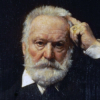
Victor Hugo
Victor Marie Hugo; 26 February 1802 – 22 May 1885) was a French poet, novelist, and dramatist of the Romantic movement. He is considered one of the greatest and best-known French writers. In France, Hugo's literary fame comes first from his poetry and then from his novels and his dramatic achievements. Among many volumes of poetry, Les Contemplations and La Légende des siècles stand particularly high in critical esteem. Outside France, his best-known works are the novels Les Misérables, 1862,...
NationalityFrench
ProfessionNovelist
Date of Birth26 February 1802
CityBesancon, France
CountryFrance
A saint addicted to excessive self-abnegation is a dangerous associate; he may infect you with poverty, and a stiffening of those joints which are needed for advancement-in a word, with more renunciation than you care for-and so you flee the contagion.
Thought is the work of the intellect, reverie is its self-indulgence. To substitute day-dreaming for thought is to confuse a poison with a source of nourishment.
The convent is supreme egotism resulting in supreme self-denial.
And the dream that our mind had sketched in haste Shall others continue, but never complete. For none upon earth can achieve his scheme; The best as the worst are futile here: We wake at the self-same point of the dream, All is here begun, and finished elsewhere.
Man does not understand nor accept immortality except on condition of self-remembrance.
I love all men who think, even those who think otherwise than myself.
Strong and rare natures are thus created; misery, almost always a stepmother, is sometimes a mother; privation gives birth to power of soul and mind; distress is the nurse of self-respect; misfortune is a good breast for great souls.
The owl goes not into the nest of the lark.
To reform a man, you must begin with his grandmother
Verse in itself does not constitute poetry. Verse is only an elegant vestment for a beautiful form. Poetry can express itself in prose, but it does so more perfectly under the grace and majesty of verse. It is poetry of soul that inspires noble sentiments and noble actions as well as noble writings.
My childhood began, as everybody's childhood begins, with prejudices. Man finds prejudices beside his cradle, puts them from him a little in the course of his career, and often, alas! takes to them again in his old age.
Love, in the eyes of the world, is either a carnal appetite or a vague fancy, which possession extinguishes or absence destroys. That is why it is commonly said, with a strange abuse of words, that passion does not endure.
In the French language, there is a great gulf between prose and poetry; in English, there is hardly any difference. It is a splendid privilege of the great literary languages Greek, Latin, and French that they possess a prose. English has not this privilege. There is no prose in English.
Every diminution of the liberty of the press is followed by a diminution of civilization. Wherever we see the freedom of the press interfered with, there we see the nutrition of the human family interrupted.