Walker Percy
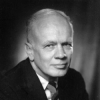
Walker Percy
Walker Percy, Obl.S.B.was an American author from Covington, Louisiana, whose interests included philosophy and semiotics. Percy is known for his philosophical novels set in and around New Orleans, Louisiana, the first of which, The Moviegoer, won the U.S. National Book Award for Fiction. He devoted his literary life to the exploration of "the dislocation of man in the modern age." His work displays a combination of existential questioning, Southern sensibility, and deep Catholic faith...
NationalityAmerican
ProfessionNovelist
Date of Birth28 May 1916
CountryUnited States of America
Bourbon does for me what the piece of cake did for Proust.
Bad books always lie. They lie most of all about the human condition.
I couldn't stand it. I still can't stand it. I can't stand the way things are. I cannot tolerate this age.
A good title should be like a good metaphor. It should intrigue without being too baffling or too obvious.
Why is it that one can look at a lion or a planet or an owl or at someone's finger as long as one pleases, but looking into the eyes of another person is, if prolonged past a second, a perilous affair?
Nowadays when a person lives somewhere, in a neighborhood, the place is not certified for him. More than likely he will live there sadly and the emptiness which is inside him will expand until it evacuates the entire neighborhood. But if he sees a movie which shows his very neighborhood, it becomes possible for him to live, for a time at least, as a person who is Somewhere and not Anywhere.
I don't like to be described as a Southern writer. The danger is, if you're described as a Southern writer, you might be thought of as someone who writes about a picturesque local scene like Uncle Tom's Cabin, Gone With the Wind, something like that.
Children notice things first, people later.
Jews wait for the Lord, Protestants sing hymns to him, Catholics say mass and eat him.
There is no pain on this earth like seeing the same woman look at another man the way she once looked at you.
One of the peculiar ironies of being a human self in the Cosmos: A stranger approaching you in the street will in a second's glance see you whole, size you up, place you in a way in which you cannot and never will, even though you have spent a lifetime with yourself, live in the Century of the Self, and therefore ought to know yourself best of all.
Why is there such a gap between nonspeaking animals and speaking man, when there is no other such gap in nature?
The difference between a non-suicide and an ex-suicide leaving the house for work, at eight o'clock on an ordinary morning: The non-suicide is a little traveling suck of care, sucking care with him from the past and being sucked toward care in the future. His breath is high in his chest. The ex-suicide opens his front door, sits down on the steps, and laughs. Since he has the option of being dead, he has nothing to lose by being alive. It is good to be alive. He goes to work because he doesn't have to.
Suppose you ask God for a miracle and God says yes, very well. How do you live the rest of your life?