Walter Benjamin
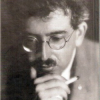
Walter Benjamin
Walter Bendix Schönflies Benjamin was a German Jewish philosopher and cultural critic. An eclectic thinker, combining elements of German idealism, Romanticism, Western Marxism, and Jewish mysticism, Benjamin made enduring and influential contributions to aesthetic theory, literary criticism, and historical materialism. He was associated with the Frankfurt School, and also maintained formative friendships with thinkers such as playwright Bertolt Brecht and Kabbalah scholar Gershom Scholem. He was also related by law to German political theorist Hannah Arendt through her first marriage...
NationalityGerman
ProfessionCritic
Date of Birth15 July 1892
CountryGermany
Gifts must affect the receiver to the point of shock.
Every image of the past that is not recognised by the present as one of its own threatens to disappear irretrievably.
The concept of progress must be grounded in the idea of catastrophe. That things are 'status quo' is the catastrophe
Writers are really people who write books not because they are poor, but because they are dissatisfied with the books which they could buy but do not like.
There is no document of civilization that is not at the same time a document of barbarism.
You could tell a lot about a man by the books he keeps - his tastes, his interest, his habits.
Marx says that revolutions are the locomotives of world history. But the situation may be quite different. Perhaps revolutions are not the train ride, but the human race grabbing for the emergency brake.
In every case the storyteller is a man who has counsel for his readers.
He who seeks to approach his own buried past must conduct himself like a man digging. . . . He must not be afraid to return again and again to the same matter; to scatter it as one scatters earth, to turn it over as one turns over soil. For the matter itself is only a deposit, a stratum, which yields only to the most meticulous examination what constitutes the real treasure hidden within the earth: the images, severed from all earlier associations, that stand -like precious fragments or torsos in a collector's gallery -in the prosaic rooms of our later understanding.
He who observes etiquette but objects to lying is like someone who dresses fashionably but wears no vest.
The only way of knowing a person is to love them without hope.
Each morning the day lies like a fresh shirt on our bed; this incomparably fine, incomparably tightly woven tissue of pure prediction fits us perfectly. The happiness of the next twenty-four hours depends on our ability, on waking, to pick it up.
To be happy is to be able to become aware of oneself without fright.
The more circumspectly you delay writing down an idea, the more maturely developed it will be on surrendering itself.