Walter Lippmann
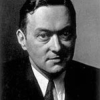
Walter Lippmann
Walter Lippmann was an American writer, reporter, and political commentator famous for being among the first to introduce the concept of Cold War, coining the term "stereotype" in the modern psychological meaning, and critiquing media and democracy in his newspaper column and several books, most notably his 1922 book Public Opinion. Lippmann was also a notable author for the Council on Foreign Relations, until he had an affair with the editor Hamilton Fish Armstrong's wife, which led to a falling...
NationalityAmerican
ProfessionJournalist
Date of Birth23 September 1889
CountryUnited States of America
Private property was the original source of freedom. It still is its main ballpark.
Most men, after a little freedom, have preferred authority with the consoling assurances and the economy of effort it brings.
Private property was the original source of freedom. It still is its main bulwark.
A useful definition of liberty is obtained only by seeking the principle of liberty in the main business of human life, that is to say, in the process by which men educate their responses and learn to control their environment.
This is one of the paradoxes of the democratic movement - that it loves a crowd and fears the individuals who compose it - that the religion of humanity should have no faith in human beings.
We must abandon the notion that the people govern. Instead, we must adopt the theory that, by their occasional mobilisations as a majority, people support or oppose the individuals who actually govern.
We forge gradually our greatest instrument for understanding the world -- introspection. We discover that humanity may resemble us very considerably -- that the best way of knowing the inwardness of our neighbors is to know ourselves.
Where all men think alike, no one thinks very much.
Love endures when the lovers love many things together And not merely each other.....
Many a time I have wanted to stop talking and find out what I really believed.
People that are orthodox when they are young are in danger of being middle-aged all their lives.
When all men think alike, no one thinks very much.
A man has honor if he holds himself to an ideal of conduct though it is inconvenient, unprofitable, or dangerous to do so.
Where all think alike, no one thinks very much