Whitley Strieber
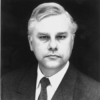
Whitley Strieber
Louis Whitley Strieberis an American writer best known for his horror novels The Wolfen and The Hunger and for Communion, a non-fiction account of his alleged experiences with non-human entities. He has maintained a dual career of author of fiction and advocate of alternative concepts through his best-selling non-fiction books, his Unknown Country website, and his internet podcast, Dreamland...
NationalityAmerican
ProfessionWriter
Date of Birth13 June 1945
CountryUnited States of America
You're typecast as a mid-list author even before you start. It used to be that a writer would get five or six books before you were pulled and given up on. They gave you a chance to build an audience. Now, if the first book doesn't build an audience, you're gone.
To make a long story short: the way I work out my fears is in the fiction. The results of that work go into the books of fact.
Everytime someone ends a prayer in the Western world they say Amen - that is the name of an Egyptian god associated with completion. So we're still praying to their gods.
The visitors tell me that there is an organic quality in our skulls that dampens telepathy, and that this is going to fade.
No doubt, I wont be believed, and thats all right, because, in a sense, it leaves me free in ways that belief would not.
The upheavals of adolescence silenced 'A Christmas Carol' for a few years. I became a firebrand atheist. Christmas - humbug! Too commercial! Then I became an agnostic. Christmas was a pro-forma affair, basically a chore. Buy mother a book, dad a new tie, my brother and sister small gifts. Pretend thanks for the fountain pens and shirts I received.
I wondered if I might not be in the grip of demons, if they were not making me suffer for their own purposes, or simply for their enjoyment.
I'm not so sure that horror should be dismissed as something less than literature.
Increasingly I felt as if I were entering a struggle that might even be more than life and death. It might be a struggle for my soul, my essence, or whatever part of me might have reference to the eternal. There are worse things than death, I suspected... so far the word demon had never been spoken among the scientists and doctors who were working with me...Alone at night I worried about the legendary cunning of demons ...At the very least I was going stark, raving mad.
I became entirely given over to extreme dread. The fear was so powerful that it seemed to make my personality completely evaporate... 'Whitley' ceased to exist. What was left was a body and a state of raw fear so great that it swept about me like a thick, suffocating curtain, turning paralysis into a condition that seemed close to death...I died and a wild animal appeared in my place.
Every Christmas now for years, I have found myself wondering about the point of the celebration. As the holiday has become more ecumenical and secular, it has lost much of the magic that I remember so fondly from childhood.
In a reality made of energy, thoughts may literally be things. What if it was intended that we create our own realities after death?
Why were my visitors so secretive, hiding themselves behind my consciousness. I could only conclude that they were using me and did not want me to know why...What if they were dangerous? Then I was terribly dangerous because I was playing a role in acclimatizing people to them.
A real stunner. Want to get swept up on a journey you will never forget and never quite escape? Open THE RITUAL OF ILLUSION and let its magic leap out, grab you, take you places unlike you have ever known.