William Butler Yeats
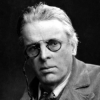
William Butler Yeats
William Butler Yeatswas an Irish poet and one of the foremost figures of 20th-century literature. A pillar of both the Irish and British literary establishments, in his later years he served as an Irish Senator for two terms. Yeats was a driving force behind the Irish Literary Revival and, along with Lady Gregory, Edward Martyn, and others, founded the Abbey Theatre, where he served as its chief during its early years. In 1923, he was awarded the Nobel Prize in...
NationalityIrish
ProfessionPoet
Date of Birth13 June 1865
CitySandymount, Ireland
CountryIreland
It is not permitted to a man who takes up pen or chisel, to seek originality, for passion is his only business, and he cannot but mould or sing after a new fashion because no disaster is like another.
Man can embody truth bet he cannot know it.
One had a lovely face, and two or three had charm, but charm and face were in vain. Because the mountain grass cannot keep the form where the mountain hare has lain.
Civilization is hoped together, brought under a rule, under the semblance of peace by manifold illusion, but Man's life is thought, and he, despite his terror, cannot cease, ravening through century after century ravening, raging and uprooting, that
Man can embody truth but he cannot know it. The intellect of man is forced to choose perfection of the life, or of the work, and if it take the second must refuse a heavenly mansion, raging in the dark.
I think a man and a woman should choose each other for life, for the simple reason that a long life with all its accidents is barely enough for a man and a woman to understand each other; and in this case to understand is to love.
Land of Heart's Desire, Where beauty has no ebb, decay no flood, But joy is wisdom, time an endless song.
Irish poets, learn your trade,Sing whatever is well made.
Well, to see rightly is the whole of wisdom, whatever dream be with us.
We had fed the heart on fantasies,The heart's grown brutal from the fare.
Out of our quarrels with others we make rhetoric. Out of our quarrels with ourselves we make poetry.
Out of Ireland have we come. Great hatred, little room, Maimed us at the start.
Others because you did not keepThat deep-sworn vow have been friends of mine;Yet always when I look death in the face,When I clamber to the heights of sleep,Or when I grow excited with wine,Suddenly I meet your face.
I think it better that at times like theseWe poets keep our mouths shut, for in truthWe have no gift to set a statesman right;He's had enough of meddling who can pleaseA young girl in the indolence of her youthOr an old man upon a winter's night.