William H. Gass
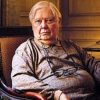
William H. Gass
William Howard Gassis an American novelist, short-story writer, essayist, critic, and former philosophy professor. He has written three novels, three collections of short stories, a collection of novellas, and seven volumes of essays, three of which have won National Book Critics Circle Award prizes and one of which, A Temple of Texts, won the Truman Capote Award for Literary Criticism. His 1995 novel The Tunnel received the American Book Award. His 2013 novel Middle C won the 2015 William Dean...
NationalityAmerican
ProfessionNovelist
Date of Birth30 July 1924
CountryUnited States of America
In general, I would think that at present prose writers are much in advance of the poets. In the old days, I read more poetry than prose, but now it is in prose where you find things being put together well, where there is great ambition, and equal talent. Poets have gotten so careless, it is a disgrace. You can’t pick up a page. All the words slide off.
I do think of my reader, or listener, really, more often, if I give a lecture, for example, and I know that I'm talking to these people; I enjoy sort of preening them a bit. But it's a matter of decorum, basically.
As a teacher, it's a great help to be teaching philosophical systems you don't believe. You can actually do a better job of presenting them if you leave your beliefs at the door.
I hate ideologies of all kinds, so I avoid jargon. I've done enough philosophy to know that some specialized terms are really needed. I don't complain when Kant does it. Or when Aristotle introduces all kinds of new words; he needed them. But these other people [modern philosophers] are just obfuscating. It just makes me annoyed.
Only the slow reader will notice the odd crowd of images-flier, butcher, seal-which have gathered to comment on the aims and activities of the speeding reader, perhaps like gossips at a wedding.
So to the wretched writer I should like to say that there’s one body only whose request for your caresses is not vulgar, is not unchaste, untoward, or impolite: the body of your work itself; for you must remember that your attentions will not merely celebrate a beauty but create one; that yours is love that brings it own birth with it, just as Plato has declared, and that you should therefore give up the blue things of this world in favor of the words which say them
Blue is therefore most suitable as the color of interior life.
I was struck by the way in which meanings are historically attached to words: it is so accidental, so remote, so twisted. A word is like a schoolgirl's room--a complete mess--so the great thing is to make out a way of seeing it all as ordered, as right, as inferred and following.
We converse as we live by repeating, by combining and recombining a few elements over and over again just as nature does when of elementary particles it builds a world.
When book and reader's furrowed brow meet, it isn't always the book that's stupid.
Knowing has two poles, and they are always poles apart: carnal knowing, the laying on of hands, the hanging of the fact by head or heels, the measurement of mass and motion, the calibration of brutal blows, the counting of supplies; and spiritual knowing, invisibly felt by the inside self, who is but a fought-over field of distraction, a stage where we recite the monotonous monologue that is our life, a knowing governed by internal tides, by intimations, motives, resolutions, by temptations, secrecy, shame, and pride.
My face is muffled in my mother's clothing. Her rhinestones injure me. See: my feet are going. Fish flee the forefinger of my aunt. The sun streams over the geraniums. What has this to do with what I feel, with what I am.
I publish a piece in order to kill it, so that I won't have to fool around with it any longer.
Surely it's better to live in the country, to live on a prairie by a drawing of rivers, in Iowa or Illinois or Indiana, say, than in any city, in any stinking fog of human beings, in any blooming orchard of machines. It ought to be.