William Harvey
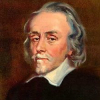
William Harvey
William Harveywas an English physician who made seminal contributions in anatomy and physiology. He was the first known to describe completely and in detail the systemic circulation and properties of blood being pumped to the brain and body by the heart, though earlier writers, such as Realdo Colombo, Miguel Servetin: Christianismi Restitutio, Paris, 1546, and Jacques Dubois, had provided precursors of the theory. In 1973 the William Harvey Hospital was constructed in the town of Ashford, several miles from his...
NationalityEnglish
ProfessionScientist
Date of Birth1 April 1578
The animal's heart is the basis of its life, its chief member, the sun of its microcosm; on the heart all its activity depends, from the heart all its liveliness and strength arise. Equally is the king the basis of his kingdoms, the sun of his microcosm, the heart of the state; from him all power arises and all grace stems.
When in many dissections, carried out as opportunity offered upon living animals, I first addressed my mind to seeing how I could discover the function and offices of the heart's movement in animals through the use of my own eyes instead of through the books and writings of others, I kept finding the matter so truly hard and beset with difficulties that I all but thought, with Fracastoro, that the heart's movement had been understood by God alone.
This organ deserves to be styled the starting point of life and the sun of our microcosm just as much as the sun deserves to be styled the heart of the world. For it is by the heart's vigorous beat that the blood is moved, perfected, activated, and protected from injury and coagulation. The heart is the tutelary deity of the body, the basis of life, the source of all things, carrying out its function of nourishing, warming, and activating body as a whole. But we shall more fittingly speak of these matters when we consider the final cause of this kind of movement.
The heart of animals is the foundation of their life, the sovereign of everything within them, the sun of their microcosm, that upon which all growth depends, from which all power proceeds.
The heart is the household divinity which, discharging its function, nourishes, cherishes, quickens the whole body, and is indeed the foundation of life, the source of all action.
There is a lust in man no charm can tame: Of loudly publishing his neighbor's shame: On eagles wings immortal scandals fly, while virtuous actions are born and die.
I avow myself the partisan of truth alone.
It is, however, an argument of no weight to say that natural bodies are first generated or compounded out of those things into which they are at the last broken down or dissolved.
I appeal to your own eyes as my witness and judge.
Memory cannot exist without endurance of the things perceived, and the thing perceived cannot remain where it has never been.
Nature is nowhere accustomed more openly to display her secret mysteries than in cases where she shows tracings of her workings apart from the beaten paths; nor is there any better way to advance the proper practice of medicine than to give our minds to the discovery of the usual law of nature, by careful investigation of cases of rarer forms of disease.
Very many maintain that all we know is still infinitely less than all that still remains unknown; nor do philosophers pin their faith to others' precepts in such wise that they lose their liberty, and cease to give credence to the conclusions of their proper senses. Neither do they swear such fealty to their mistress Antiquity that they openly, and in sight of all, deny and desert their friend Truth.
Nature is a volume of which God is the author.
Only by understanding the wisdom of natural foods and their effects on the body, shall we attain mastery of disease and pain, which shall enable us to relieve the burden of mankind.