William Osler
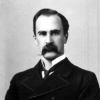
William Osler
Sir William Osler, 1st Baronet, FRS, FRCPwas a Canadian physician and one of the four founding professors of Johns Hopkins Hospital. Osler created the first residency program for specialty training of physicians, and he was the first to bring medical students out of the lecture hall for bedside clinical training. He has frequently been described as the "Father of Modern Medicine". Osler was a person of many interests, who in addition to being a physician, was a bibliophile, historian, author,...
NationalityCanadian
ProfessionDoctor
Date of Birth12 July 1849
CountryCanada
By far the most dangerous foe we have to fight is apathy-indifference from whatever cause, not from a lack of knowledge, but from carelessness, from absorption in other pursuits, from a contempt bred of self satisfaction.
If it were not for the great variability among individuals, medicine might as well be a science, not an art.
Things cannot always go your way. Learn to accept in silence the minor aggravations, cultivate the gift of taciturnity and consume your own smoke with an extra draught of hard work, so that those about you may not be annoyed with the dust and soot of your complaints.
Nothing will sustain you more potently than the power to recognize in your humdrum routine, as perhaps it may be thought, the true poetry of life.
Observe, record, tabulate, communicate. Use your five senses. Learn to see, learn to hear, learn to feel, learn to smell, and know that by practice alone you can become expert.
One of the first duties of the physician is to educate the masses not to take medicine.
There is no disease more conducive to clinical humility than aneurysm of the aorta.
Without faith a man can do nothing; with it all things are possible.
No bubble is so iridescent or floats longer than that blown by the successful teacher.
Soap and water and common sense are the best disinfectants.
Patients rarely die of the disease from which they suffer. Secondary or terminal infections are the real cause of death.
There are only two sorts of doctors; those who practise with their brains, and those who practise with their tongues.
Every patient you see is a lesson in much more than the malady from which he suffers.
The philosophies of one age have become the absurdities of the next, and the foolishness of yesterday has become the wisdom of tomorrow.