William Robertson Smith
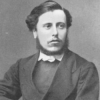
William Robertson Smith
William Robertson Smith FRSEwas a Scottish orientalist, Old Testament scholar, professor of divinity, and minister of the Free Church of Scotland. He was an editor of the Encyclopædia Britannica and contributor to the Encyclopaedia Biblica. He is also known for his book Religion of the Semites, which is considered a foundational text in the comparative study of religion...
NationalityScottish
ProfessionScientist
Date of Birth8 November 1846
religious lying men
But we must not forget, this ritual expressed, certain ideas which lie at the very root of true religion, the fellowship of the worshippers with one another in their fellowship with the deity, and the consecration of the bonds of kinship as the type of all right ethical relations between man and man.
god people
The god can no more exist without his people than the nation without its god.
assigned follows mythology ought prominent
This being so, it follows that mythology ought not to take the prominent place that is too often assigned to it in the scientific study of ancient faiths.
alive force forms original precedent religious
This, it may be said, is no more than a hypothesis... only of that force of precedent which in all times has been so strong to keep alive religious forms of which the original meaning is lost.
actual arbitrary common custom demand itself myth principle religious requires ritual
But if it not be true, the myth itself requires to be explained, and every principle of philosophy and common sense demand that the explanation be sought, not in arbitrary allegorical categories, but in the actual facts of ritual or religious custom to which the myth attaches.
act body gods men reference social
Every social act had a reference to the gods as well as to men, for the social body was not made up of men only, but of gods and men.
strong ideas imagination
Even the highest forms of sacrificial worship present much that is repulsive to modern ideas, and in particular it requires an effort to reconcile our imagination to the bloody ritual which is prominent in almost every religion which has a strong sense of sin.
sacred essentials ancient
But, strictly speaking, this mythology was no essential part of ancient religion, for it had no sacred sanction and no binding force on the worshippers.
religious strong alive
This, it may be said, is no more than a hypothesis, but it satisfies the conditions of a legitimate hypothesis, by postulating the operation of no unknown or uncertain cause, but only of that force of precedent which in all times has been so strong to keep alive religious forms of which the original meaning is lost.
sacrifice men ideas
That the God-man died for his people, and that His death is their life, is an idea which was in some degree foreshadowed by the older mystical sacrifices.
religion deities dissolution
The dissolution of the nation destroys the national religion, and dethrones the national deity.
men community political
Religion did not exist for the saving of souls but for the preservation and welfare of society, and in all that was necessary to this end every man had to take his part, or break with the domestic and political community to which he belonged.
people religion antiques
In all the antique religions, mythology takes the place of dogma; that is, the sacred lore of priests and people... and these stories afford the only explanation that is offered of the precepts of religion and the prescribed rules of ritual.
father people firsts
The god, it would appear, was frequently thought of as the physical progenitor or first father of his people.