William Whewell
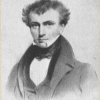
William Whewell
William Whewell FRS FGSwas an English polymath, scientist, Anglican priest, philosopher, theologian, and historian of science. He was Master of Trinity College, Cambridge. In his time as a student there, he achieved distinction in both poetry and mathematics...
NationalityEnglish
ProfessionScientist
Date of Birth24 May 1794
lines bending force
Hence no force, however great, can stretch a cord, however fine, into a horizontal line which is accurately straight: there will always be a bending downwards.
independent exercise ideas
Fundamental ideas are not a consequence of experience, but a result of the particular constitution and activity of the mind, which is independent of all experience in its origin, though constantly combined with experience in its exercise.
nature faces mask
There is a mask of theory over the whole face of nature.
failure errors trials
Every failure is a step to success. Every detection of what is false directs us towards what is true: every trial exhausts some tempting form of error. Not only so; but scarcely any attempt is entirely a failure; scarcely any theory, the result of steady thought, is altogether false; no tempting form of Error is without some latent charm derived from Truth.
art discovery iron
Gold and iron at the present day, as in ancient times, are the rulers of the world; and the great events in the world of mineral art are not the discovery of new substances, but of new and rich localities of old ones.
theory constructs demolish
The catastrophist constructs theories, the uniformitarian demolishes them.
language speak dare
Geometry in every proposition speaks a language which experience never dares to utter; and indeed of which she but halfway comprehends the meaning.
faith age insight
Those who have obtained the farthest insight into Nature have been, in all ages, firm believers in God.
reflection degrees our-thoughts
We cannot observe external things without some degree of Thought; nor can we reflect upon our Thoughts, without being influenced in the course of our reflection by the Things which we have observed.
science accepting hypothesis
The hypotheses we accept ought to explain phenomena which we have observed. But they ought to do more than this: our hypotheses ought to foretell phenomena which have not yet been observed.
failure steps success-failure
Every failure is a step to success.
men looks purpose
Nobody since Newton has been able to use geometrical methods to the same extent for the like purposes; and as we read the Principia we feel as when we are in an ancient armoury where the weapons are of gigantic size; and as we look at them we marvel what manner of man he was who could use as a weapon what we can scarcely lift as a burden.
class facts elements
The system becomes more coherent as it is further extended. The elements which we require for explaining a new class of facts are already contained in our system. In false theories, the contrary is the case.
mean pride giving
The person who did most to give to analysis the generality and symmetry which are now its pride, was also the person who made mechanics analytical; I mean Euler.