William Whewell
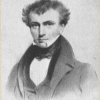
William Whewell
William Whewell FRS FGSwas an English polymath, scientist, Anglican priest, philosopher, theologian, and historian of science. He was Master of Trinity College, Cambridge. In his time as a student there, he achieved distinction in both poetry and mathematics...
NationalityEnglish
ProfessionScientist
Date of Birth24 May 1794
real doe appearance
The hypotheses which we accept ought to explain phenomena which we have observed. But they ought to do more than this; our hypotheses ought to foretell phenomena which have not yet been observed; ... because if the rule prevails, it includes all cases; and will determine them all, if we can only calculate its real consequences. Hence it will predict the results of new combinations, as well as explain the appearances which have occurred in old ones. And that it does this with certainty and correctness, is one mode in which the hypothesis is to be verified as right and useful.
science world progressive
Astronomy is ... the only progressive Science which the ancient world produced.
law ease world
But with regard to the material world, we can at least go so far as this;-we can perceive that events are brought about, not by insulated interpositions of Divine power, exerted in each particular ease, but by the establishment of general laws.
science men law
To discover the laws of operative power in material productions, whether formed by man or brought into being by Nature herself, is the work of a science, and is indeed what we more especially term Science.
tests theory accounts
It is a test of true theories not only to account for but to predict phenomena.
taken order giving
In order that the facts obtained by observation and experiment may be capable of being used in furtherance of our exact and solid knowledge, they must be apprehended and analysed according to some Conceptions which, applied for this purpose, give distinct and definite results, such as can be steadily taken hold of and reasoned from.
use chemistry consistent
...the question undoubtedly is, or soon will be, not whether or no we shall employ notation in chemistry, but whether we shall use a bad and incongruous, or a consistent and regular notation.
attitude men soul
A man really and practically looking onwards to an immortal life, on whatever grounds, exhibits to us the human soul in an enobled attitude.
past differences cases
Our assent to the hypothesis implies that it is held to be true of all particular instances. That these cases belong to past or to future times, that they have or have not already occurred, makes no difference in the applicability of the rule to them. Because the rule prevails, it includes all cases.
names use firsts
We need very much a name to describe a cultivator of science in general. I should incline to call him a scientist. [The first use of the word.]
knowledge men ideas
According to the technical language of old writers, a thing and its qualities are described as subject and attributes; and thus a man's faculties and acts are attributes of which he is the subject. The mind is the subject in which ideas inhere. Moreover, the man's faculties and acts are employed upon external objects; and from objects all his sensations arise. Hence the part of a man's knowledge which belongs to his own mind, is subjective: that which flows in upon him from the world external to him, is objective.
men desire action
Every man has obligations which belong to his station. Duties extend beyond obligations, and direct the affections, desires, and intentions, as well as the actions.
reason employed conscience
Conscience is the reason employed about questions of right and wrong.
reality revolution may
The earlier truths are not expelled but absorbed, not contradicted but extended; and the history of each science, which may thus appear like a succession of revolutions, is, in reality, a series of developements.