Zalmay Khalilzad
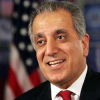
Zalmay Khalilzad
Zalmay Mamozy Khalilzadis a U.S. counselor at the Center for Strategic and International Studiesand president of Khalilzad Associates, an international business consulting firm based in Washington, D.C. He was the United States Ambassador to the United Nations under President George W. Bush. He has been involved with U.S. policy makers at the White House, State Department and Pentagon since the mid-1980s, and was the highest-ranking Muslim American in the Administration of U.S. President George W. Bush. Khalilzad's previous assignments in...
NationalityAmerican
ProfessionPolitician
Date of Birth22 March 1951
CountryUnited States of America
It is critical that the newly elected leaders of Iraq do their part by forming a government of national unity with a good program and competent ministers as soon as possible.
The terrorists are seeking to provoke sectarian war, and Iraq needs a government of national unity in the face of this threat. Iraq is bleeding while they are moving at a very slow pace.
This is a critical moment for Iraq. We call on all Iraqis to unite against terror and violence. Coming together in unity to condemn this barbaric act, and working for Iraq's salvation will be the right response. This desperate and despicable act shows that terrorists stop at nothing and care for nothing.
This decision, the formation of a government of national unity is extremely important. If they (Iraqi leaders) make the right decision forming a national unity government -- competent ministers, good process with a good program governing from the center -- it will put Iraq on the right trajectory; it will be a major step forward for Iraq.
I think American impatience has to do with the notion that we don't know what we're doing. If we could project that we are moving in the right direction, Americans are ready to be very patient.
It is a moment of danger but also a moment of opportunity.
will depend not only on our military strategy, but also on the political progress.
We have opened the Pandora's box and the question is, what is the way forward? If another incident (occurs), Iraq is really vulnerable.
That will bring down the total level from 17 brigades to 15.
We will help them if our help is needed. They will have to decide if they need help or not.
When there have been differences between the various forces with regard to a particular issue, and they've asked for my help, I have proposed to them options for bridging the differences between them. Failure is not an option, and if they need my help, I have told them I'm available at any time.
The reaction that's needed by the Iraqis -- they need to come together.
We're going to press very hard for this.
Everything that needs to be done must be done to avoid a civil war, and I think they are keenly aware of the danger.