Alexander Hamilton
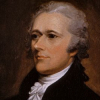
Alexander Hamilton
Alexander Hamiltonwas a Founding Father of the United States, chief staff aide to General George Washington, one of the most influential interpreters and promoters of the U.S. Constitution, the founder of the nation's financial system, the founder of the Federalist Party, the world's first voter-based political party, the founder of the United States Coast Guard, and the founder of The New York Post newspaper. As the first Secretary of the Treasury, Hamilton was the primary author of the economic policies...
NationalityAmerican
ProfessionPolitician
Date of Birth11 January 1757
CountryUnited States of America
The laws of Congress are restricted to a certain sphere, and when they depart from this sphere, they are no longer supreme or binding.
Measures which serve to abridge the free competition of foreign Articles, have a tendency to occasion an enhancement of prices.
If government is in the hands of the few, they will tyrannize the many; if in the hands of the many, they will tyrannize over the few. It ought to be in the hands of both, and be separated...they will need a mutual check. This check is a monarch.
How can you trust people who are poor and own no property? ... Inequality of property will exist as long as liberty exists.
The tendency of a national bank is to increase public and private credit. The former gives power to the state, for the protection of its rights and interests: and the latter facilitates and extends the operations of commerce among individuals. Industry is increased, commodities are multiplied, agriculture and manufacturers flourish: and herein consists the true wealth and prosperity of a state.
The Spirit of Enterprise, which characterizes the commercial part of America, has left no occasion of displaying itself unimproved. It is not at all probable that this unbridled spirit would pay much respect to those regulations of trade by which particular States might endeavor to secure exclusive benefits to their own citizens.
Passive commerce . . . should thus . . . [compel us] to content ourselves with the first price of our commodities, and to see the profits of our trade snatched from us, to enrich our enemies and persecutors. That unequalled spirit of enterprise . . . an inexhaustible mine of national wealth, would be stifled and lost; and poverty and disgrace would overspread a country, which, with wisdom, might make herself the admiration and envy of the world.
By multiplying the means of gratification, by promoting the introduction and circulation of the precious metals, those darling objects of human avarice and enterprise, it serves to vivify and invigorate the channels of industry, and to make them flow with greater activity and copiousness. The assiduous merchant, the laborious husbandman, the active mechanic, and the industrious manufacturer,-all orders of men, look forward with eager expectation and growing alacrity to this pleasing reward of their toils.
CREDIT supposes specific and permanent funds for the punctual payment of interest, with a moral certainty of a final redemption of the principal.
Is it not time to awake from the deceitful dream of a golden age, and to adopt as a practical maxim for the direction of our political conduct, that we, as well as the other inhabitants of the globe, are yet remote from the happy empire of perfect wisdom and perfect virtue?
The loss of liberty to a generous mind is worse than death.
It has been observed, [that for the federal government] to coerce the States is one of the maddest projects that was ever devised.
[In the event of war, Americans would] resort for repose and security to institutions which have a tendency to destroy their civil and political rights. To be more safe they, at length, become willing to run the risk of being less free.
The proposed Constitution, so far from implying an abolition of the State governments, makes them constituent parts of the national sovereignty, by allowing them a direct representation in the Senate, and leaves in their possession certain exclusive and very important portions of sovereign power. This fully corresponds, in every rational import of the terms, with the idea of a federal government.