Alexander Hamilton
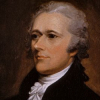
Alexander Hamilton
Alexander Hamiltonwas a Founding Father of the United States, chief staff aide to General George Washington, one of the most influential interpreters and promoters of the U.S. Constitution, the founder of the nation's financial system, the founder of the Federalist Party, the world's first voter-based political party, the founder of the United States Coast Guard, and the founder of The New York Post newspaper. As the first Secretary of the Treasury, Hamilton was the primary author of the economic policies...
NationalityAmerican
ProfessionPolitician
Date of Birth11 January 1757
CountryUnited States of America
There is one transcendant advantage belonging to the province of the State governments . . . -I mean the ordinary administration of criminal and civil justice.
I confess I am at a loss to discover what temptation the persons entrusted with the administration of the general government could ever feel to divest the States of the authorities of that description. The regulation of the mere domestic police of a State appears to me to hold out slender allurements to ambition.
The administration of private justice between the citizens of the same state, the supervision of agriculture and of other concerns of a similar nature, all those things in short which are proper to be provided for by local legislation, can never be desirable cares of a general jurisdiction . . . the attempt to exercise these powers would be as troublesome as it would be nugatory; and the possession of them, for that reason, would contribute nothing to the dignity, to the importance, or to the splendour of the national government.
The variety of more minute interests, which will necessarily fall under the superintendence of the local administrations . . . cannot be particularized without involving a detail too tedious and uninteresting to compensate for the instruction it might afford.
It may be laid down as a general rule, that their confidence in and obedience to a government, will be commonly proportioned to the goodness or badness of its administration . . . . Various reasons have been suggested in the course of these papers, to induce a probability that the general government will be better administered than the particular governments.
The experience of past ages may inform us, that when the circumstances of a people render them distressed, their rulers generally recur to severe, cruel, and oppressive measures. Instead of endeavoring to establish their authority in the affection of their subjects, they think they have no security but in their fear.
The Liberty of the press consists in the right to publish with impunity truth with good motives for justifiable ends, though reflecting on government, magistracy, or individuals.
There are still to be found , or designing men, who stand ready to advocate the paradox of perpetual peace between the states, though dismembered and alienated from each other . . . . The genius of republics, say they, is pacific; the spirit of commerce has a tendency to soften the manners of men, and to extinguish those inflammable humours which have so often kindled into wars. Commercial republics, like ours, will never be disposed to waste themselves in ruinous contentions with each other. They will be governed by mutual interest, and will cultivate a spirit of mutual amity and concord.
The propriety of a law, in a constitutional light, must always be determined by the nature of the powers upon which it is founded.
As on the one hand, the necessity for borrowing in particular emergencies cannot be doubted, so on the other, it is equally evident that to be able to borrow upon good terms, it is essential that the credit of a nation should be well established.
It is by far the safer course to lay [considerations of the future] altogether aside; and to confine our attention wholly to the nature and extent of the powers as they are delineated in the constitution. Everything beyond this, must be left to the prudence and firmness of the people; who, as they will hold the scales in their own hands, it is to be hoped, will always take care to preserve the constitutional equilibrium between the General and State governments.
The voice of the people has been said to be the voice of God; and, however generally this maxim has been quoted and believed, it is not true to fact. The people are turbulent and changing, they seldom judge or determine right.
The passions of a revolution are apt to hurry even good men into excesses.
Has it not. . . invariably been found that momentary passions, and immediate interests, have a more active and imperious control over human conduct than general or remote considerations of policy, utility and justice?