Anna Julia Cooper
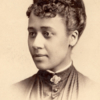
Anna Julia Cooper
Anna Julia Haywood Cooperwas an American author, educator, speaker and one of the most prominent African-American scholars in United States history. Upon receiving her PhD in history from the University of Paris-Sorbonne in 1924, Cooper became the fourth African-American woman to earn a doctoral degree. She was also a prominent member of Washington, D.C.'s African-American community and a member of Alpha Kappa Alpha sorority...
NationalityAmerican
ProfessionEducator
Date of Birth10 August 1858
CountryUnited States of America
The great, the fundamental need of any nation, any race, is for heroism, devotion, sacrifice; and there cannot be heroism, devotion, or sacrifice in a primarily skeptical spirit.
A race cannot be purified from without.
Let woman's claim be as broad in the concrete as the abstract. We take our stand on the solidarity of humanity, the oneness of life, and the unnaturalness and injustice of all special favoritism, whether of sex, race, country, or condition. If one link of the chain is broken, the chain is broken.
All prejudices, whether of race, sect or sex, class pride and caste distinctions are the belittling inheritance and badge of snobs and prigs.
We might as well expect to grow trees from leaves as hope to build up a civilization or a manhood without taking into consideration our women and the home life made by them Let our girls feel that we expect something more of them than that they merely look pretty and appear well in society. Teach them that there is a race with special needs which they and only they can help; that the world needs and is already asking for their trained, efficient forces.
The colored woman of to-day occupies, one may say, a unique position in this country. In a period of itself transitional and unsettled, her status seems one of the least ascertainable and definitive of all the forces which make for our civilization. She is confronted by both a woman question and a race problem ...
Only the BLACK WOMAN can say 'when and where I enter, in the quiet, undisputed dignity of my womanhood, without violence and without suing or special patronage, then and there the whole Negro race enters with me.'
The cause of freedom is not the cause of a race or a sect, a party or a class - it is the cause of humankind, the very birthright of humanity.
The cause of freedom is not the cause of a race or a sect, a party or a class-it is the cause of human kind, the very birthright of humanity.
Teach [our girls] that there is a race with special needs which they and only they can help; that the world needs and is already asking for their trained, efficient forces.
... women are more quiet. They don't feel called to mount a barrel and harangue by the hour every time they imagine they have produced an idea.
Religion must be life made true; and life is action, growth, development - begun now and ending never. And a life made true cannot confine itself - it must reach out and twine around every pulsing interest within reach of its uplifting tendrils.
tis woman's strongest vindication for speaking that the world needs to hear her voice. It would be subversive of every human interest that the cry of one-half the human family be stifled. ... The world has had to limp along with the wobbling gait and one-sided hesitancy of a man with one eye. Suddenly the bandage is removed from the other eye and the whole body is filled with light. It sees a circle where before it saw a segment. The darkened eye restored, every member rejoices with it.
It is the curse of minorities in this power-worshipping world that either from fear or from an uncertain policy of expedience they distrust their own standards and hesitate to give voice to their deeper convictions, submitting supinely to estimates and characterizations of themselves as handed down by a not unprejudiced dominant majority.