Anton Corbijn
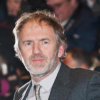
Anton Corbijn
Anton Johannes Gerrit Corbijn van Willenswaardis a Dutch photographer, music video director, and film director. He is the creative director behind the visual output of Depeche Mode and U2, having handled the principal promotion and sleeve photography for both bands for almost three decades. Some of his works include music videos for Depeche Mode's "Enjoy the Silence", U2's "One", Bryan Adams' "Do I Have to Say the Words? and Nirvana's "Heart-Shaped Box", as well as the Ian Curtis biographical film...
NationalityDutch
ProfessionPhotographer
Date of Birth20 May 1955
Anton Corbijn quotes about
Film was something that I didn't see as a step up from music videos, though obviously, music videos, the fact that you work with a crew and a film camera, are the closest to film I've ever been. That is the only schooling I've ever had.
Mandela is just the eternal man. You want that man to be around forever. It's the closest thing we have to God, I think. He's the father of mankind, almost.
My first pictures are from 1972, and my first proper camera dates back to 1973. During the first year I used my father's camera. It had a flash on it, which I don't like, but I didn't know anything about photography back then, so it was just what I did.
'Control' had to do with my own life a lot, and that's why that seemed to be a film I could be the director of, because I had an emotional attachment to the whole story. And because of that experience, I feel that I can try other films. I didn't set out to become a director.
I wanted to do a film for a while, but I never found a script that I felt I was going to be the right person for; because if you've never made a film, you're not taught how to make a film, and you feel like you lack skills.
A lot of scripts that I was given I didn't feel were right for me, because I didn't feel anything for them - I didn't feel like I was going to change in life and start directing.
Once you make decisions, you can't go back, but in photography, that process can continue. With film, you have to eliminate all the possibilities and make the one possibility work the best for you, so you have to become very creative with the direction you've chosen.
I had no agent, and I was getting approached by so many people that I tried to escape for a while because I couldn't believe that world. Photography is not an industry, and suddenly an industry came to me, so I sort of had to accept it in the end and get an agent.
I'm not totally blind to the fact that I like people to see my work, but if it's not something I would enjoy seeing in a magazine, then I think I shouldn't be making it. I think that I don't represent only myself, I represent more people; I mean, if I like it, then I think more people will like it because I think I'm quite a normal guy.
If you're an artist, it's OK to put your money into your art. The advantage, in hindsight, is that you become the film, and the film becomes you; you breathe it.
I feel a responsibility to myself, and not so much for the world at large. Because of my Calvinistic upbringing, I was trained to think that what you do has to have a purpose.
I don't want to continue to do what I did when I was 20. I would like to continue to develop myself and not continue to hang around with bands.
I don't want to knock photography, and I don't feel that film is up there but photography isn't. I think they're next to each other really, you know. There's an incredible strength to a still picture. Or there can be an incredible strength to a still picture that can outlive you. That can outlive a film.
I wanted to move away from Holland for my work because I felt that things would be better for me in England. But when I heard Joy Division's 'Unknown Pleasures', that pushed me towards making the move and making it real. I met them within 12 days of moving to England.