Aristotle
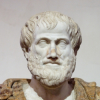
Aristotle
Aristotle was a Greek philosopher and scientist born in the city of Stagira, Chalkidice, on the northern periphery of Classical Greece. His father, Nicomachus, died when Aristotle was a child, whereafter Proxenus of Atarneus became his guardian. At eighteen, he joined Plato's Academy in Athens and remained there until the age of thirty-seven. His writings cover many subjects – including physics, biology, zoology, metaphysics, logic, ethics, aesthetics, poetry, theater, music, rhetoric, linguistics, politics and government – and constitute the first comprehensive system...
NationalityGreek
ProfessionPhilosopher
They who have drunk beer, fall on their back, but there is a peculiarity in the effects of the drink made from barley, for they that get drunk on other intoxicating liquors fall on all parts of their body, they fall on the left side, on the right side, on their faces, and and on their backs. But it is only those who get drunk on beer that fall on their backs with their faces upward.
The law does not expressly permit suicide, and what it does not permit it forbids.
We become just by the practice of just actions, self-controlled by exercising self-control, and courageous by performing acts of courage.
The vigorous are no better than the lazy during one half of life, for all men are alike when asleep.
Nor was civil society founded merely to preserve the lives of its members; but that they might live well: for otherwise a state might be composed of slaves, or the animal creation... nor is it an alliance mutually to defend each other from injuries, or for a commercial intercourse. But whosoever endeavors to establish wholesome laws in a state, attends to the virtues and vices of each individual who composes it; from whence it is evident, that the first care of him who would found a city, truly deserving that name, and not nominally so, must be to have his citizens virtuous.
Life in the true sense is perceiving or thinking.
If there is some end of the things we do, which we desire for its own sake, clearly this must be the good. Will not knowledge of it, then, have a great influence on life? Shall we not, like archers who have a mark to aim at, be more likely to hit upon what we should? If so, we must try, in outline at least, to determine what it is.
It is no easy task to be good.
We must become just be doing just acts.
In everything, it is no easy task to find the middle.
We deliberate not about ends, but about means.
Human beings are curious by nature.
They who are to be judges must also be performers.
Whether we call it sacrifice, or poetry, or adventure, it is always the same voice that calls.