Arthur Henderson
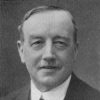
Arthur Henderson
Arthur Henderson PCwas a British iron moulder and Labour politician. He was the first Labour cabinet minister, won the Nobel Peace Prize in 1934 and, uniquely, served three separate terms as Leader of the Labour Party in three different decades. He was popular among his colleagues, who called him "Uncle Arthur" in acknowledgement of his integrity, his devotion to the cause and his imperturbability. He was a transitional figure whose policies were, at first, close to those of the Liberal...
NationalityBritish
ProfessionPolitician
Date of Birth13 September 1863
The vast upheaval of the World War set in motion forces that will either destroy civilization or raise mankind to undreamed of heights of human welfare and prosperity.
The Disarmament Conference has become the focal point of a great struggle between anarchy and world order... between those who think in terms of inevitable armed conflict and those who seek to build a universal and durable peace.
In short, it may be said that on paper the obligations to settle international disputes peacefully are now so comprehensive and far-reaching that it is almost impossible for a state to resort to war without violating one or more solemn treaty obligations.
The world before 1914 was already a world in which the welfare of each individual nation was inextricably bound up with the prosperity of the whole community of nations.
Four years of world war, at a cost in human suffering which our minds are mercifully too limited to imagine, led to the very clear realization that international anarchy must be abandoned if civilization was to survive.
I do not believe that the values which the Western democracies consider essential to civilization can survive in a world rent by the international anarchy of nationalism and the economic anarchy of competitive enterprise.
The world wants disarmament, the world needs disarmament. We have it in our power to help fashion future history.
The forces that are driving mankind toward unity and peace are deep-seated and powerful. They are material and natural, as well as moral and intellectual.
This is our world, and we must make the best of it.
To solve the problem of organizing world peace we must establish world law and order.
Another essential to a universal and durable peace is social justice.
It has been said that since September, 1931, the world has been divided into wholehearted violators and halfhearted supporters of the Covenant.
The market expects someone else to come in with a better bid.
The first condition of success for the League of Nations is, therefore, a firm understanding between the British Empire and the United States of America and France and Italy that there will be no competitive building up of fleets or armies between them.