Arthur Henderson
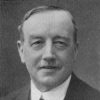
Arthur Henderson
Arthur Henderson PCwas a British iron moulder and Labour politician. He was the first Labour cabinet minister, won the Nobel Peace Prize in 1934 and, uniquely, served three separate terms as Leader of the Labour Party in three different decades. He was popular among his colleagues, who called him "Uncle Arthur" in acknowledgement of his integrity, his devotion to the cause and his imperturbability. He was a transitional figure whose policies were, at first, close to those of the Liberal...
NationalityBritish
ProfessionPolitician
Date of Birth13 September 1863
Moreover, war has become a thing potentially so terrible and destructive that it should have been the common aim of statesmen to put an end to it forever.
In our modern world of interdependent nations, hardly any state can wage war successfully without raising loans and buying war materials of every kind in the markets of other nations.
In some states militant nationalism has gone to the lengths of dictatorship, the cult of the absolute or totalitarian state and the glorification of war.
We had four years of world war which the peoples endured only because they were told that their sufferings would free humanity forever from the scourge of war.
In almost every country there are elements of opinion which would welcome such a conclusion because they wish to return to the politics of the balance of power, unrestricted and unregulated armaments, international anarchy, and preparation for war.
It is because I believe that it is in the power of such nations to lead the world back into the paths of peace that I propose to devote myself to explaining what, in my opinion, can and should be done to banish the fear of war that hangs so heavily over the world.
The more the history of the World War and what led up to it is studied, the more clearly those tragic years become revealed as a vast collapse of civilization.
The vast upheaval of the World War set in motion forces that will either destroy civilization or raise mankind to undreamed of heights of human welfare and prosperity.
In short, it may be said that on paper the obligations to settle international disputes peacefully are now so comprehensive and far-reaching that it is almost impossible for a state to resort to war without violating one or more solemn treaty obligations.
Four years of world war, at a cost in human suffering which our minds are mercifully too limited to imagine, led to the very clear realization that international anarchy must be abandoned if civilization was to survive.
He would see civilization in danger of perishing under the oppression of a gigantic paradox: he would see multitudes of people starving in the midst of plenty, and nations preparing for war although pledged to peace.
But to cut off relations with an aggressor may often invite retaliation by armed action, and this would, in its turn, make necessary some form of collective self-defence by the loyal members of the League.
Those nations have a very great responsibility at this juncture of the world's affairs, for by throwing their joint weight into the scales of history on the right side, they may tip the balance decisively in favour of peace.
Therefore, let us not despair, but instead, survey the position, consider carefully the action we must take, and then address ourselves to our common task in a mood of sober resolution and quiet confidence, without haste and without pause.