Arthur Henderson
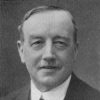
Arthur Henderson
Arthur Henderson PCwas a British iron moulder and Labour politician. He was the first Labour cabinet minister, won the Nobel Peace Prize in 1934 and, uniquely, served three separate terms as Leader of the Labour Party in three different decades. He was popular among his colleagues, who called him "Uncle Arthur" in acknowledgement of his integrity, his devotion to the cause and his imperturbability. He was a transitional figure whose policies were, at first, close to those of the Liberal...
NationalityBritish
ProfessionPolitician
Date of Birth13 September 1863
We cannot give up hope for the future of humanity because it is our destiny to shape that future for good or ill.
But to cut off relations with an aggressor may often invite retaliation by armed action, and this would, in its turn, make necessary some form of collective self-defence by the loyal members of the League.
Moreover, war has become a thing potentially so terrible and destructive that it should have been the common aim of statesmen to put an end to it forever.
Those nations have a very great responsibility at this juncture of the world's affairs, for by throwing their joint weight into the scales of history on the right side, they may tip the balance decisively in favour of peace.
Therefore, let us not despair, but instead, survey the position, consider carefully the action we must take, and then address ourselves to our common task in a mood of sober resolution and quiet confidence, without haste and without pause.
It has become impossible to give up the enterprise of disarmament without abandoning the whole great adventure of building up a collective peace system.
Thus, there can be no real disarmament except on the basis of the collective peace system of the League of Nations.
But the standards of statecraft insisted upon the untrammeled claim of each nation to uphold its own view of its rights by force and to build whatever armaments it considered necessary for this purpose.
On the contrary, the characteristic element of the present situation is that economic questions have finally and irrevocably invaded the domain of public life and politics.
Men and women everywhere are once more asking the old question - is it peace?
When we saw a down tick in the economy, pet businesses continued to do OK, ... People were very elastic when it came to spending for their pets.
Originally the League was forbidden to touch the subject of tariffs, and there was a strong predisposition to regard banking as a mystery that must be removed entirely from the purview of governments.
The real difficulty is to make sure that such treaty obligations will be observed.
Whatever we do or fail to do will influence the course of history.