Arthur Schopenhauer
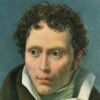
Arthur Schopenhauer
Arthur Schopenhauerwas a German philosopher. He is best known for his 1818 work The World as Will and Representation, in which he characterizes the phenomenal world as the product of a blind, insatiable, and malignant metaphysical will. Proceeding from the transcendental idealism of Immanuel Kant, Schopenhauer developed an atheistic metaphysical and ethical system that has been described as an exemplary manifestation of philosophical pessimism, rejecting the contemporaneous post-Kantian philosophies of German idealism. Schopenhauer was among the first thinkers in Western...
NationalityGerman
ProfessionPhilosopher
Date of Birth22 February 1788
CountryGermany
To call the world God is not to explain it; it is only to enrich our language with a superfluous synonym.
Astrology furnishes a splendid proof of the contemptible subjectivity of men. It refers the course of celestial bodies to the miserable ego: it establishes a connection between the comets in heaven and squabbles and rascalities on earth.
Martyrdom is the only way a man can become famous without ability.
With people of limited ability modesty is merely honesty. But with those who possess great talent it is hypocrisy.
The discovery of truth is prevented more effectively, not by the false appearance things present and which mislead into error, not directly by weakness of the reasoning powers, but by preconceived opinion, by prejudice.
Wicked thoughts and worthless efforts gradually set their mark on the face, especially the eyes.
Boredom is just the reverse side of fascination: both depend on being outside rather than inside a situation, and one leads to the other.
Money is human happiness in the abstract; he, then, who is no longer capable of enjoying human happiness in the concrete devotes himself utterly to money.
Empirical sciences prosecuted purely for their own sake, and without philosophic tendency are like a face without eyes.
The common man is not concerned about the passage of time, the man of talent is driven by it.
It often happens that we blurt out things that may in some kind of way be harmful to us, but we are silent about things that may make us look ridiculous; because in this case effect follows very quickly on cause.
Hence, in all countries the chief occupation of society is card-playing, and it is the gauge of its value, and an outward sign that it is bankrupt in thought. Because people have no thoughts to deal in, they deal cards, and try and win one another’s money. Idiots!
The conviction that the world and man is something that had better not have been, is of a kind to fill us with indulgence towards one another.
Mensch kann tun was er will; er kann aber nicht wollen was er will. (One can choose what to do, but not what to want.)