Arthur Schopenhauer
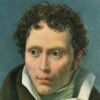
Arthur Schopenhauer
Arthur Schopenhauerwas a German philosopher. He is best known for his 1818 work The World as Will and Representation, in which he characterizes the phenomenal world as the product of a blind, insatiable, and malignant metaphysical will. Proceeding from the transcendental idealism of Immanuel Kant, Schopenhauer developed an atheistic metaphysical and ethical system that has been described as an exemplary manifestation of philosophical pessimism, rejecting the contemporaneous post-Kantian philosophies of German idealism. Schopenhauer was among the first thinkers in Western...
NationalityGerman
ProfessionPhilosopher
Date of Birth22 February 1788
CountryGermany
That human life must be some kind of mistake is sufficiently proved by the simple observation that man is a compound of needs which are hard to satisfy; that their satisfaction achieves nothing but a painless condition in which he is only given over to boredom . . .
Reading is equivalent to thinking with someone else's head instead of with one's own.
Men are by nature merely indifferent to one another; but women are by nature enemies.
The more unintelligent a man is, the less mysterious existence seems to him.
Nature shows that with the growth of intelligence comes increased capacity for pain, and it is only with the highest degree of intelligence that suffering reaches its supreme point.
If God made the world, I would not be that God, for the misery of the world would break my heart.
Without books the development of civilization would have been impossible. They are the engines of change, windows on the world, "Lighthouses" as the poet said "erected in the sea of time." They are companions, teachers, magicians, bankers of the treasures of the mind, Books are humanity in print.
We will gradually become indifferent to what goes on in the minds of other people when we acquire a knowledge of the superficial nature of their thoughts, the narrowness of their views and of the number of their errors. Whoever attaches a lot of value to the opinions of others pays them too much honor.
What people commonly call Fate is, as a general rule, nothing but their own stupid and foolish conduct.
Talent hits a target no one else can hit; Genius hits a target no one else can see.
When you look back on your life, it looks as though it were a plot, but when you are into it, it's a mess: just one surprise after another. Then, later, you see it was perfect.
The assumption that animals are without rights, and the illusion that our treatment of them has no moral significance, is a positively outrageous example of Western crudity and barbarity. Universal compassion is the only guarantee of morality.
A man can be himself only so long as he is alone; and if he does not love solitude, he will not love freedom; for it is only when he is alone that he is really free.
Thus, the task is not so much to see what no one yet has seen, but to think what nobody yet has thought about that which everybody sees.