Arthur Schopenhauer
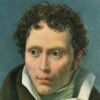
Arthur Schopenhauer
Arthur Schopenhauerwas a German philosopher. He is best known for his 1818 work The World as Will and Representation, in which he characterizes the phenomenal world as the product of a blind, insatiable, and malignant metaphysical will. Proceeding from the transcendental idealism of Immanuel Kant, Schopenhauer developed an atheistic metaphysical and ethical system that has been described as an exemplary manifestation of philosophical pessimism, rejecting the contemporaneous post-Kantian philosophies of German idealism. Schopenhauer was among the first thinkers in Western...
NationalityGerman
ProfessionPhilosopher
Date of Birth22 February 1788
CountryGermany
If a relationship is perfectly natural there will be a complete fusion of the happiness of both of you-owing to fellow-feeling and various other laws which govern our natures, this is, quite simply, the greatest happiness that can exist.
The tallest oak tree once was an acorn that any pig could have swallowed.
To truth only a brief celebration of victory is allowed between the two long periods during which it is condemned as paradoxical, or disparaged as trivial.
No doubt, when modesty was made a virtue, it was a very advantageous thing for the fools, for everybody is expected to speak of himself as if he were one.
A man shows his character just in the way in which he deals with trifles, for then he is off his guard.
In truth the most striking figure for the relation of the two is that of the strong blind man carrying the sighted lame man on his shoulders.
On the path of actions, great heart is the chief recommendation; on that works, a great head.
Will without intellect is the most vulgar and common thing in the world, possessed by every blockhead, who, in the gratification of his passions, shows the stuff of which he is made.
The bad thing about all religions is that, instead of being able to confess their allegorical nature, they have to conceal it.
Our moral virtues benefit mainly other people; intellectual virtues, on the other hand, benefit primarily ourselves; therefore the former make us universally popular, the latter unpopular.
A book can never be anything more than the impression of its author’s thoughts. The value of these thoughts lies either in the matter about which he has thought, or in the form in which he develops his matter — that is to say, what he has thought about it.
The law of simplicity and naïveté applies to all fine art, for it is compatible with what is most sublime.
Necessity is the constant scourge of the lower classes, ennui of the higher ones.
The greatest intellectual capacities are only found in connection with a vehement and passionate will.