Arthur Schopenhauer
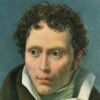
Arthur Schopenhauer
Arthur Schopenhauerwas a German philosopher. He is best known for his 1818 work The World as Will and Representation, in which he characterizes the phenomenal world as the product of a blind, insatiable, and malignant metaphysical will. Proceeding from the transcendental idealism of Immanuel Kant, Schopenhauer developed an atheistic metaphysical and ethical system that has been described as an exemplary manifestation of philosophical pessimism, rejecting the contemporaneous post-Kantian philosophies of German idealism. Schopenhauer was among the first thinkers in Western...
NationalityGerman
ProfessionPhilosopher
Date of Birth22 February 1788
CountryGermany
A man must have grown old and lived long in order to see how short life is.
Every original idea is first ridiculed, then vigorously attacked, and finally taken for granted.
The problem with Germans is that they look in the clouds for what lies at their feet.
A man becomes a philosopher by reason of a certain perplexity, from which he seeks to free himself.
Every human perfection is linked to an error which it threatens to turn into
A happy life is impossible; the best that a man can attain is a heroic life.
Every new born being indeed comes fresh and blithe into the new existence, and enjoys it as a free gift: but there is, and can be, nothing freely given. It's fresh existence is paid for by the old age and death of a worn out existence which has perished, but which contained the indestructible seed out of which the new existence has arisen: they are one being.
The eternal being..., as it lives in us, also lives in every animal.
One man is more concerned with the impression he makes on the rest of mankind, another with the impression the rest of mankind makes on him.
Do not shorten the morning by getting up late; look upon it as the quintessence of life, as to a certain extent sacred.
Every satisfaction he attains lays the seeds of some new desire, so that there is no end to the wishes of each individual will.
Consciousness makes the individual careful to maintain his own existence; and if this were not so, there would be no surety for the preservation of the species. From all this it is clear that individuality is not a form of perfection, but rather a limitation; and so to be freed from it is not loss but gain.
Whether we are in a pleasant or a painful state depends, finally, upon the kind of matter that pervades and engrosses our consciousness and what we compare it to - better and we envious and sad, worse and we feel grateful and happy.
...In the blessings as well as in the ills of life, less depends upon what befalls us than upon the way in which it is met...