Arthur Schopenhauer
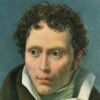
Arthur Schopenhauer
Arthur Schopenhauerwas a German philosopher. He is best known for his 1818 work The World as Will and Representation, in which he characterizes the phenomenal world as the product of a blind, insatiable, and malignant metaphysical will. Proceeding from the transcendental idealism of Immanuel Kant, Schopenhauer developed an atheistic metaphysical and ethical system that has been described as an exemplary manifestation of philosophical pessimism, rejecting the contemporaneous post-Kantian philosophies of German idealism. Schopenhauer was among the first thinkers in Western...
NationalityGerman
ProfessionPhilosopher
Date of Birth22 February 1788
CountryGermany
In order to increase his pleasures, man has intentionally added to the number and pressure of his needs, which in their original state were not much more difficult to satisfy than those of the brute. Hence luxury in all its forms; delicate food, the use of tobacco and opium, spirituous liquors, fine clothes, and the thousand and one things that he considers necessary to his existence.
The greatest wisdom is to make the enjoyment of the present the supreme object of life; because that is the only reality, all else being merely the play of thought. On the other hand, such a course might just as well be called the greatest folly: for that which in the next moment exists no more, and vanishes utterly, like a dream, can never be worth a serious effort.
A man never is happy, but spends his whole life in striving after something which he thinks will make him so; he seldom attains his goal, and when he does, it is only to be disappointed; he is mostly shipwrecked in the end, and comes into harbor with mast and rigging gone. And then, it is all one whether he has been happy or miserable; for his life was never anything more than a present moment always vanishing; and now it is over.
To gain anything we have longed for is only to discover how vain and empty it is; and even though we are always living in expectation of better things, at the same time we often repent and long to have the past back again.
The progress of life shows a man the stuff of which he is made.
Gaiety alone, as it were, is the hard cash of happiness; everything else is just a promissory note.
If the lives of men were relieved of all need, hardship and adversity; if everything they took in hand were successful, they would be so swollen with arrogance that, though they might not burst, they would present the spectacle of unbridled folly-nay, they would go mad. And I may say, further, that a certain amount of care or pain or trouble is necessary for every man at all times. A ship without ballast is unstable and will not go straight.
Something of great importance now past is inferior to something of little importance now present, in that the latter is a reality, and related to the former as something to nothing.
When a man has reached a condition in which he believes that a thing must happen because he does not wish it, and that what he wishes to happen never will be, this is really the state called desperation.
Although as a rule the absurd culminates, and it seems impossible for the voice of the individual ever to penetrate through the chorus of foolers and fooled, still there is left to the genuine works of all times a quite peculiar, silent, slow, and powerful influence; and as if by a miracle, we see them rise at last out of the turmoil like a balloon that floats up out of the thick atmosphere of this globe into purer regions. Having once arrived there, it remains at rest, and no one can any longer draw it down again.
He who lives to see two or three generations is like a man who sits some time in the conjurer's booth at a fair, and witnesses the performance twice or thrice in succession. The tricks were meant to be seen only once; and when they are no longer a novelty and cease to deceive, their effect is gone.
No one knows what capacities for doing and suffering he has in himself, until something comes to rouse them to activity: just as in a pond of still water, lying there like a mirror, there is no sign of the roar and thunder with which it can leap from the precipice, and yet remain what it is; or again, rise high in the air as a fountain. When water is as cold as ice, you can have no idea of the latent warmth contained in it.
It's the niceties that make the difference fate gives us the hand, and we play the cards.
The little incidents and accidents of every day fill us with emotion, anxiety, annoyance, passion, as long as they are close to us, when they appear so big, so important, so serious; but as soon as they are borne down the restless stream of time they lose what significance they had; we think no more of them and soon forget them altogether. They were big only because they were near.