Barbara Ehrenreich
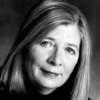
Barbara Ehrenreich
Barbara Ehrenreichis an American author and political activist who describes herself as "a myth buster by trade", and has been called "a veteran muckraker" by The New Yorker. During the 1980s and early 1990s she was a prominent figure in the Democratic Socialists of America. She is a widely read and award-winning columnist and essayist, and author of 21 books. Ehrenreich is perhaps best known for her 2001 book Nickel and Dimed: OnGetting By in America. A memoir of Ehrenreich's...
NationalityAmerican
ProfessionWriter
Date of Birth26 August 1941
CountryUnited States of America
I know that the last thing a book wants is to just sit around unread, serving as an element of interior decorating. So when I have people over, all they have to do is glance at my books, and I implore them to take a few home with them. If I am really ambitious, I pack books into boxes and donate them to prisons.
Every time a bank swoops down to snatch up a home, it should be met with a crowd of jeering, obstructive neighbors. And although this may be point 4.5, how about organizing a mass refusal to pay back student loans?
For the millions of us who live glued to computer keyboards at work and TV monitors at home, food may be more than entertainment. It may be the only sensual experience left.
Whether you work outside the home or not, never tell them [your children] that being a mommy is your 'job.' Being a mommy is a relationship, not a profession.
To be homeless in America is to live like a fugitive. The destitute are our own native-born "illegals."
There's a lot of cruelty going on all the time, and I'm not just talking about inter-human cruelty. I'm talking about whole species becoming extinct, asteroids hitting planets, black holes gobbling up stars.
It was a very big principle in my upbringing that you should respect everybody's work. The street sweeper. Everybody. You should never look down on anybody for their work.
We - we spend a lot of time, scholarly time, thinking about love and sex, but very little about the - the kind of joy that can take over a crowd of people or a group of people, in festivity, in ecstatic ritual of some kind, in celebration.
I'm interested in what bonds people together. You know, what brings us together in good ways? And there's not a lot known about that.
I've spent so many years talking about poverty and economic justice, I'm strongly tempted to get biblical. Jesus' teachings are so radical; they're just insanely generous and apocalyptic. Christians become more fascinated by the dead Jesus. They don't like the living Jesus.
Our atheism family tradition is traced to a - I don't know if it was great-great or a great-great-great grandmother who was a poor Irish-American woman in the 1880s in western Montana.
I would never call myself a cancer survivor because I think it devalues those who do not survive. There's this whole mythology that people bravely battle their cancer and then they become survivors. Well, the ones who don't survive may be just as brave, you know, just as courageous, wonderful people.
The Civil Rights Movement, it wasn't just a couple of, you know, superstars like Martin Luther King. It was thousands and thousands - millions, I should say - of people taking risks, becoming leaders in their community.
When someone works for less pay than she can live on -- when, for example, she goes hungry so that you can eat more cheaply and conveniently -- than she has made a great sacrifice for you, she has made of a gift of some part of her abilities, her health, and her life.