Blaise Pascal
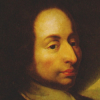
Blaise Pascal
Blaise Pascalwas a French mathematician, physicist, inventor, writer and Christian philosopher. He was a child prodigy who was educated by his father, a tax collector in Rouen. Pascal's earliest work was in the natural and applied sciences where he made important contributions to the study of fluids, and clarified the concepts of pressure and vacuum by generalising the work of Evangelista Torricelli. Pascal also wrote in defence of the scientific method...
NationalityFrench
ProfessionPhilosopher
Date of Birth19 June 1623
CityClermont-Ferrand, France
CountryFrance
All that tends not to charity is figurative. The sole aim of the Scripture is charity.
All is one, all is different. How many natures exist in man? How many vocations? And by what chance does each man ordinarily choose what he has heard praised?
Admiration spoils all from infancy.
According to the doctrine of chance, you ought to put yourself to the trouble of searching for the truth; for if you die without worshiping the True Cause, you are lost. "But," say you, "if He had wished me to worship Him, He would have left me signs of His will." He has done so; but you neglect them. Seek them, therefore; it is well worth it.
Plurality which is not reduced to unity is confusion; unity which does not depend on plurality is tyranny.
If men knew themselves, God would heal and pardon them.
We are fools to depend upon the society of our fellow-men. Wretched as we are, powerless as we are, they will not aid us; we shall die alone.
That a religion may be true, it must have knowledge of our nature.
The mind naturally makes progress, and the will naturally clings to objects; so that for want of right objects, it will attach itself to wrong ones.
You corrupt religion either in favour of your friends, or against your enemies.
Pride counterbalances all our miseries, for it either hides them, or, if it discloses them, boasts of that disclosure. Pride has such a thorough possession of us, even in the midst of our miseries and faults, that we are prepared to sacrifice life with joy, if it may but be talked of.
To call a king "Prince" is pleasing, because it diminishes his rank.
Our imagination so magnifies this present existence, by the power of continual reflection on it, and so attenuates eternity, by not thinking of it at all, that we reduce an eternity to nothingness, and expand a mere nothing to an eternity; and this habit is so inveterately rooted in us that all the force of reason cannot induce us to lay it aside.
Each one is all in all to himself; for being dead, all is dead to him.