Carl Rogers
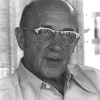
Carl Rogers
Carl Ransom Rogerswas an influential American psychologist and among the founders of the humanistic approachto psychology. Rogers is widely considered to be one of the founding fathers of psychotherapy research and was honored for his pioneering research with the Award for Distinguished Scientific Contributions by the American Psychological Associationin 1956...
NationalityAmerican
ProfessionOther
Date of Birth8 January 1902
CityOak Park, IL
CountryUnited States of America
The state of empathy, or being empathic, is to perceive the internal frame of reference of another with accuracy and with the emotional components and meanings which pertain thereto as if one were the person.
I have learned that in any significant or continuing relationship, feelings which are persistent had best be expressed. If they are expressed as feelings owned by me, the result may be temporarily upsetting but ultimately far more rewarding than any attempt to deny or conceal them.
We cannot change, we cannot move away from what we are, until we thoroughly accept what we are. Then change seems to come about almost unnoticed.
The purpose of adult education is to help them to learn, not to teach them all you know and thus stop them from learning.
Don't be a damned ammunition wagon. Be a rifle!
Life, at its best, is a flowing, changing process in which nothing is fixed.
The very essence of the creative is its novelty, and hence we have no standard by which to judge it.
The elements in a relationship which seem impossible to share, the secretly disturbing, dissatisfying elements, are the most rewarding to share. This is a hard, risky, frightening thing to learn, and it needs to be re-learned over and over.
Experience is, for me, the highest authority.
The organism has one basic tendency and striving - to actualize, maintain, and enhance the experiencing organism
A second characteristic of the process which for me is the good life, is that it involves an increasingly tendency to live fully in each moment. I believe it would be evident that for the person who was fully open to his new experience, completely without defensiveness, each moment would be new.
In a person who is open to experience each stimulus is freely relayed through the nervous system, without being distorted by any process of defensiveness.
The genuinely significant creation, whether an idea, or a work of art, or a scientific discovery, is most likely to be seen at first as erroneous, bad, or foolish. Later it may be seen as obvious, something self-evident to all. Only still later does it receive its final evaluation as a creative contribution. It seems clear no contemporary mortal can satisfactorily evaluate a creative product at the time it is formed, and this statement is increasingly true the greater the novelty of the creation.
Adults who think that children must be manipulated for their own good have developed the attitude of a controlling parent who lacks faith in himself, the child, or humanity or himself.