Carl Rogers
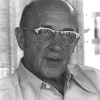
Carl Rogers
Carl Ransom Rogerswas an influential American psychologist and among the founders of the humanistic approachto psychology. Rogers is widely considered to be one of the founding fathers of psychotherapy research and was honored for his pioneering research with the Award for Distinguished Scientific Contributions by the American Psychological Associationin 1956...
NationalityAmerican
ProfessionOther
Date of Birth8 January 1902
CityOak Park, IL
CountryUnited States of America
To perceive the internal frame of reference of another with accuracy and with the emotional components and meanings which pertain thereto as if one were the person, but without ever losing the "as if" condition. Thus, it means to sense the hurt or the pleasure of another as he senses it and to perceive the causes thereof as he perceives them, but without ever losing the recognition that it is as if I were hurt or pleased and so forth.
The sense of community does not arise out of collective movement, nor from conforming to some group direction. Quite the contrary. Each individual tends to use the opportunity to become all that he or she can become. Separateness and diversity - the uniqueness of being "me" - are experienced
When the other person is hurting, confused, troubled, anxious, alienated, terrified; or when he or she is doubtful of self-worth, uncertain as to identity, then understanding is called for. The gentle and sensitive companionship of an empathic stance… provides illumination and healing. In such situations deep understanding is, I believe, the most precious gift one can give to another.
There are as many "real worlds" as there are people!
The action of the child inventing a new game with his playmates; Einstein formulating a theory of relativity; the housewife devising a new sauce for the meat, a young author writing his first novel; all of these are in terms of definition, Creative, and there is no attempt to set them in some order of more or less Creative.
Both the young and the old are almost completely useless in our modern society, and are made keenly aware of that uselessness. They have no place. They are private, isolated - and hopeless.
We in the West seem to have made a fetish out of complete individual self-sufficiency, of not needing help, of being completely private except in a very few selected relationships.
We think we listen, but very rarely do we listen with real understanding, true empathy. Yet listening, of this very special kind, is one of the most potent forces for change that I know.
If the time comes when our culture tires of the endless homicidal feuds, despairs of the use of force and war as a means of bringing peace, becomes discontent with the half-lives that its members are living - only then will our culture seriously look for alternatives.
I hear the words, the thoughts, the feeling tones, the personal meaning, even the meaning that is below the conscious intent of the speaker. Sometimes too, in a message which superficially is not very important, I hear a deep human cry that lies buried and unknown far below the surface of the person. So I have learned to ask myself, can I hear the sounds and sense the shape of this other person's inner world? Can I resonate to what he is saying so deeply that I sense the meanings he is afraid of, yet would like to communicate, as well as those he knows?
What I am is good enough if I would only be it openly.
The basic idea behind teaching is to teach people what they need to know.
The good life is a process, not a state of being. It is a direction not a destination.
The only person who cannot be helped is that person who blames others.