Cesare Beccaria
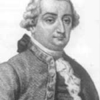
Cesare Beccaria
Cesare Bonesana-Beccaria, Marquis of Gualdrasco and Villareggiowas an Italian criminologist, jurist, philosopher, and politician, who is widely considered as the most talented jurist and one of the greatest thinkers of the Age of Enlightenment. Recognized to be one of the fathers of classical criminal theory and modern penology, he is well remembered for his treatise On Crimes and Punishments, which condemned torture and the death penalty, and was a founding work in the field of penology and the Classical School...
NationalityItalian
ProfessionJudge
Date of Birth15 March 1738
CountryItaly
If we open our history books, we shall see that the laws, for all that they are or should be contracts amongst free men, have rarely been anything but the tools of the passions of a few men or the offspring of a fleeting and haphazard necessity.
If the same punishment is prescribed for two crimes that injure society in different degrees, then men will face no stronger deterrent from committing the greater crime if they find it in their advantage to do so.
Happy are those few nations that have not waited till the slow succession of human vicissitudes should, from the extremity of evil, produce a transition to good; but by prudent laws have facilitated the progress from one to the other!
If someone were to say that life at hard labor is as painful as death and therefore equally cruel, I should reply that, taking all the unhappy moments of perpetual slavery together, it is perhaps even more painful, but these moments are spread out over a lifetime, and capital punishment exercises all its power in an instant.
Easy, simple and great laws, which await nothing but a sign from the lawgiver to spread prosperity and vigour throughout the nation, laws which would earn him immortal hymns of gratitude down the generations, are those which are least considered or least wanted.
To show men that crimes can be pardoned, and that punishment is not their inevitable consequence, encourages the illusion of impunity and induces the belief that, since there are pardons, those sentences which are not pardoned are violent acts of force rather than the products of justice.
Nothing could be more dangerous than following the popular maxim whereby it is the spirit of the law that must be consulted. This is an embankment that, once broken, gives way to a torrent of opinions.
Philosophers see no harm in the Jesuits other than in their effect on humanity and the sciences. The vulgar and especially the prejudiced only hate them from an envy and jealousy born out of conspiracy and intrigue at an organisation which overshadows them.
Men's most superficial feelings lead them to prefer cruel laws. Nevertheless, when they are subjected to them themselves, it is in each man's interest that they be moderate, because the fear of being injured is greater than the desire to injure.
The moral and political principles that govern men are derived from three sources: revelation, natural law, and the artificial conventions of society. With regard to its main purpose, there is no comparison between the first and the others; but all three are alike in that they all lead towards happiness in this mortal life.
I myself owe everything to French books. They developed in my soul the sentiments of humanity which had been stifled by eight years of fanatical and servile education.
If there were an exact and universal scale of punishments and crimes, we would have a fairly reliable and shared instrument to measure the degree of tyranny and liberty, of the basic humanity or malice of the different nations.
By 'justice', I understand nothing more than that bond which is necessary to keep the interest of individuals united, without which men would return to their original state of barbarity. All punishments which exceed the necessity of preserving this bond are, in their nature, unjust.
In order that punishment should not be an act of violence perpetrated by one or many upon a private citizen, it is essential that it should be public, speedy, necessary, the minimum possible in the given circumstances, proportionate to the crime, and determined by the law.