Cesare Beccaria
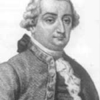
Cesare Beccaria
Cesare Bonesana-Beccaria, Marquis of Gualdrasco and Villareggiowas an Italian criminologist, jurist, philosopher, and politician, who is widely considered as the most talented jurist and one of the greatest thinkers of the Age of Enlightenment. Recognized to be one of the fathers of classical criminal theory and modern penology, he is well remembered for his treatise On Crimes and Punishments, which condemned torture and the death penalty, and was a founding work in the field of penology and the Classical School...
NationalityItalian
ProfessionJudge
Date of Birth15 March 1738
CountryItaly
When the code of laws is once fixed, it should be observed in the literal sense, and nothing more is left to the judge than to determine whether an action is or is not conformable to the written law.
In order that punishment should not be an act of violence perpetrated by one or many upon a private citizen, it is essential that it should be public, speedy, necessary, the minimum possible in the given circumstances, proportionate to the crime, and determined by the law.
The laws only can determine the punishment of crimes, and the authority of making penal laws can only reside with the legislator, who represents the whole society united by the social compact.
Our knowledge and all of our ideas are mutually connected; the more complicated they are, the more numerous must be the roads that lead to them and depart from them.
To the extent that human spirits are made gentle by the social state, sensibility increases; as it increases, the severity of punishment must diminish if one wishes to maintain a constant relation between object and feeling.
Unless some other factor is operative, in large, weak and underpopulated states, the luxury of ostentation prevails over that of comfort; but in countries which are more populous than extensive, the luxury of comfort always diminishes ostentation.
For every crime that comes before him, a judge is required to complete a perfect syllogism in which the major premise must be the general law; the minor, the action that conforms or does not conform to the law; and the conclusion, acquittal or punishment. If the judge were constrained, or if he desired to frame even a single additional syllogism, the door would thereby be opened to uncertainty.
False is the idea of utility that sacrifices a thousand real advantages for one imaginary or trifling inconvenience; that would take fire from men because it burns, and water because one may drown in it; that has no remedy for evils except destruction. The laws that forbid the carrying of arms are laws of such a nature. They disarm only those who are neither inclined nor determined to commit crimes.
Happy is the nation without a history.
The fault no child ever loses is the one he was most punished for.
The punishment of death is the war of a nation against a citizen whose destruction it judges to be necessary or useful.
Laws against the possession of weapons only disarm those who have no intention of committing a crime.
For a punishment to be just it should consist of only such gradations of intensity as suffice to deter men from committing crimes.
It is better to prevent crimes than to punish them.