Claude Bernard
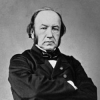
Claude Bernard
Claude Bernardwas a French physiologist. Historian Ierome Bernard Cohen of Harvard University called Bernard "one of the greatest of all men of science". Among many other accomplishments, he was one of the first to suggest the use of blind experiments to ensure the objectivity of scientific observations. He originated the term milieu intérieur, and the associated concept of homeostasis...
NationalityFrench
ProfessionScientist
Date of Birth12 July 1813
CityRhone, France
CountryFrance
We must keep our freedom of mind, ... and must believe that in nature what is absurd, according to our theories, is not always impossible.
I do not ... reject the use of statistics in medicine, but I condemn not trying to get beyond them and believing in statistics as the foundation of medical science. ... Statistics ... apply only to cases in which the cause of the facts observed is still [uncertain or] indeterminate. ... There will always be some indeterminism ... in all the sciences, and more in medicine than in any other. But man's intellectual conquest consists in lessening and driving back indeterminism in proportion as he gains ground for determinism by the help of the experimental method..
We must remain, in a word, in an intellectual disposition which seems paradoxical, but which, in my opinion, represents the true mind of the investigator. We must have a robust faith and yet not believe.
The investigator should have a robust faith - and yet not believe.
The doubter is a true man of science: he doubts only himself and his interpretations, but he believes in science.
Men who believe too firmly in their theories, do not believe enough in the theories of others. So ... these despisers of their fellows ... make experiments only to destroy a theory, instead of to seek the truth.
Laplace considers astronomy a science of observation, because we can only observe the movements of the planets; we cannot reach them, indeed, to alter their course and to experiment with them. "On earth," said Laplace, "we make phenomena vary by experiments; in the sky, we carefully define all the phenomena presented to us by celestial motion." Certain physicians call medicine a science of observations, because they wrongly think that experimentation is inapplicable to it.
The goal of scientific physicians in their own science ... is to reduce the indeterminate. Statistics therefore apply only to cases in which the cause of the facts observed is still indeterminate.
A man of science rises ever, in seeking truth; and if he never finds it in its wholeness, he discovers nevertheless very significant fragments; and these fragments of universal truth are precisely what constitutes science.
Theories are like a stairway; by climbing, science widens its horizon more and more, because theories embody and necessarily include proportionately more facts as they advance.
Well-observed facts, though brought to light by passing theories, will never die; they are the material on which alone the house of science will at last be built.
When a physician is called to a patient, he should decide on the diagnosis, then the prognosis, and then the treatment. ... Physicians must know the evolution of the disease, its duration and gravity in order to predict its course and outcome. Here statistics intervene to guide physicians, by teaching them the proportion of mortal cases, and if observation has also shown that the successful and unsuccessful cases can be recognized by certain signs, then the prognosis is more certain.
Ardent desire for knowledge, in fact, is the one motive attracting and supporting investigators in their efforts; and just this knowledge, really grasped and yet always flying before them, becomes at once their sole torment and their sole happiness. Those who do not know the torment of the unknown cannot have the joy of discovery which is certainly the liveliest that the mind of man can ever feel.
As soon as the circumstances of an experiment are well known, we stop gathering statistics. ... The effect will occur always without exception, because the cause of the phenomena is accurately defined. Only when a phenomenon includes conditions as yet undefined,Only when a phenomenon includes conditions as yet undefined, can we compile statistics. ... we must learn therefore that we compile statistics only when we cannot possibly help it; for in my opinion, statistics can never yield scientific truth.