Claude Bernard
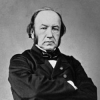
Claude Bernard
Claude Bernardwas a French physiologist. Historian Ierome Bernard Cohen of Harvard University called Bernard "one of the greatest of all men of science". Among many other accomplishments, he was one of the first to suggest the use of blind experiments to ensure the objectivity of scientific observations. He originated the term milieu intérieur, and the associated concept of homeostasis...
NationalityFrench
ProfessionScientist
Date of Birth12 July 1813
CityRhone, France
CountryFrance
It has often been said that, to make discoveries, one must be ignorant. This opinion, mistaken in itself, nevertheless conceals a truth. It means that it is better to know nothing than to keep in mind fixed ideas based on theories whose confirmation we constantly seek, neglecting meanwhile everything that fails to agree with them.
A discovery is generally an unforeseen relation not included in theory.
A great discovery is a fact whose appearance in science gives rise to shining ideas, whose light dispels many obscurities and shows us new paths.
The better educated we are and the more acquired information we have, the better prepared shall we find our minds for making great and fruitful discoveries.
[Those] who have an excessive faith in their theories or in their ideas are not only poorly disposed to make discoveries, but they also make very poor observations.
The joy of discovery is certainly the liveliest that the mind of man can ever feel.
Even mistaken hypotheses and theories are of use in leading to discoveries. This remark is true in all the sciences. The alchemists founded chemistry by pursuing chimerical problems and theories which are false. In physical science, which is more advanced than biology, we might still cite men of science who make great discoveries by relying on false theories. It seems, indeed, a necessary weakness of our mind to be able to reach truth only across a multitude of errors and obstacles.
Priestley [said] that each discovery we make shows us many others that should be made.
Those who do not know the torment of the unknown cannot have the joy of discovery.
Men who have excessive faith in their theories or ideas are not only ill prepared for making discoveries; they also make very poor observations. Of necessity, they observe with a preconceived idea, and when they devise an experiment, they can see, in its results,only a confirmation of their theory. In this way they distort observation and often neglect very important facts because they do not further their aim.
Laplace considers astronomy a science of observation, because we can only observe the movements of the planets; we cannot reach them, indeed, to alter their course and to experiment with them. "On earth," said Laplace, "we make phenomena vary by experiments; in the sky, we carefully define all the phenomena presented to us by celestial motion." Certain physicians call medicine a science of observations, because they wrongly think that experimentation is inapplicable to it.
The goal of scientific physicians in their own science ... is to reduce the indeterminate. Statistics therefore apply only to cases in which the cause of the facts observed is still indeterminate.
A man of science rises ever, in seeking truth; and if he never finds it in its wholeness, he discovers nevertheless very significant fragments; and these fragments of universal truth are precisely what constitutes science.
Theories are like a stairway; by climbing, science widens its horizon more and more, because theories embody and necessarily include proportionately more facts as they advance.