David Hume
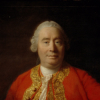
David Hume
David Hume– 25 August 1776) or David Homewas a Scottish philosopher, historian, economist, and essayist, who is best known today for his highly influential system of radical philosophical empiricism, skepticism, and naturalism...
NationalityScottish
ProfessionPhilosopher
Date of Birth7 May 1711
race world superstitions
It must appear impossible, that theism could, from reasoning, have been the primary religion of human race, and have afterwards, by its corruption, given birth to polytheism and to all the various superstitions of the heathen world. Reason, when obvious, prevents these corruptions: When abstruse, it keeps the principles entirely from the knowledge of the vulgar, who are alone liable to corrupt any principle or opinion.
pain believe thinking
In all the events of life, we ought still to preserve our scepticism. If we believe that fire warms, or water refreshes, it is only because it costs us too much pains to think otherwise.
mankind historian dependence
What would become of history, had we not a dependence on the veracity of the historian, according to the experience, what we have had of mankind?
common-sense novelty admiration
If refined sense, and exalted sense, be not so useful as common sense, their rarity, their novelty, and the nobleness of their objects, make some compensation, and render them the admiration of mankind.
order supposing-that looks
It were better, never to look beyond the present material world. By supposing it to contain the principle of its order within itself, we really assert it to be God; and the sooner we arrive at that divinity, the better.
destiny
Anything that is conceivable is possible.
taken passion reality
I say then, that belief is nothing but a more vivid, lively, forcible, firm, steady conception of an object, than what the imagination alone is ever able to attain. This variety of terms, which may seem so unphilosophical, is intended only to express that act of the mind, which renders realities, or what is taken for such, more present to us than fictions, causes them to weigh more in the thought, and gives them a superior influence on the passions and imagination.
states barometer interest
...interest is the barometer of the state...
pieces advantage existence
Nothing is pure and entire of a piece. All advantages are attended with disadvantages. A universal compensation prevails in all conditions of being and existence.
art arrogance mind
Among the arts of conversation no one pleases more than mutual deference or civility, which leads us to resign our own inclinations to those of our companions, and to curb and conceal that presumption and arrogance so natural to the human mind.
men understanding culture
Though men of delicate taste be rare, they are easily to be distinguished in society by the soundness of their understanding, and the superiority of their faculties above the rest of mankind.
passion men being-positive
Nothing can be more unphilosophical than to be positive or dogmatical on any subject; and even if excessive scepticism could be maintained it would not be more destructive to all just reasoning and inquiry. When men are the most sure and arrogant, they are commonly the most mistaken, and have there given reins to passion, without that proper deliberation and suspense which can alone secure them from the grossest absurdities.
drama passion magic
Every movement of the theater by a skilful poet is communicated, as it were, by magic, to the spectators; who weep, tremble, resent, rejoice, and are inflamed with all the variety of passions which actuate the several personages of the drama.
real passion government
Avarice, the spur of industry, is so obstinate a passion, and works its way through so many real dangers and difficulties, that it is not likely to be scared by an imaginary danger, which is so small, that it scarcely admits of calculation. Commerce, therefore, in my opinion, is apt to decay in absolute governments, not because it is there less secure, but because it is less honourable.