David Hume
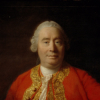
David Hume
David Hume– 25 August 1776) or David Homewas a Scottish philosopher, historian, economist, and essayist, who is best known today for his highly influential system of radical philosophical empiricism, skepticism, and naturalism...
NationalityScottish
ProfessionPhilosopher
Date of Birth7 May 1711
ignorance pride together
Weakness, fear, melancholy, together with ignorance, are the true sources of superstition. Hope, pride, presumption, a warm indignation, together with ignorance, are the true sources of enthusiasm.
motivation littles judgment
What is easy and obvious is never valued; and even what is in itself difficult, if we come to knowledge of it without difficulty, and without and stretch of thought or judgment, is but little regarded.
men order selfishness
From the apparent usefulness of the social virtues, it has readily been inferred by sceptics, both ancient and modern, that all moral distinctions arise from education, and were, at first, invented, and afterwards encouraged ... in order to render men tractable, and subdue their natural ferocity and selfishness, which incapacitated them for society.
selfish voice morality
.. the voice of nature and experience seems plainly to oppose the selfish theory.
wisdom men law
Municipal laws are a supply to the wisdom of each individual; and, at the same time, by restraining the natural liberty of men, make private interest submit to the interest of the public.
friendship marriage strong
Between married persons, the cement of friendship is by the laws supposed so strong as to abolish all division of possessions: andhas often, in reality, the force ascribed to it.
wise philosophy jealous
It seems then, say I, that you leave politics entirely out of the question, and never suppose, that a wise magistrate can justly be jealous of certain tenets of philosophy, such as those of Epicurus, which, denying a divine existence, and consequently a providence and a future state, seem to loosen, in a great measure, the ties of morality, and may be supposed, for that reason, pernicious to the peace of civil society.
war men political
In ancient times, bodily strength and dexterity, being of greater use and importance in war, was also much more esteemed and valued, than at present. ... In short, the different ranks of men are, in a great measure, regulated by riches.
philosophy character men
A man who has cured himself of all ridiculous prepossessions, and is fully, sincerely, and steadily convinced, from experience as well as philosophy, that the difference of fortune makes less difference in happiness than is vulgarly imagined; such a one does not measure out degrees of esteem according to the rent-rolls of his acquaintance. ... his internal sentiments are more regulated by the personal characters of men, than by the accidental and capricious favors of fortune.
wise men enquiry
In our reasonings concerning matter of fact, there are all imaginable degrees of assurance, from the highest certainty to the lowest species of moral evidence. A wise man, therefore, proportions his belief to the evidence.
running believe silly
Does a man of sense run after every silly tale of hobgoblins or fairies, and canvass particularly the evidence? I never knew anyone, that examined and deliberated about nonsense who did not believe it before the end of his enquiries.
men political knaves
It is... a just political maxim, that every man must be supposed a knave.
law miracle facts
A miracle is a violation of the laws of nature; and as a firm and unalterable experience has established these laws, the proof against a miracle, from the very nature of the fact, is as entire as any argument from experience can possibly be imagined.
religious sex women
On the theory of the soul's mortality, the inferiority of women's capacity is easily accounted for: Their domestic life requires no higher faculties either of mind or body. This circumstance vanishes and becomes absolutely insignificant, on the religious theory: The one sex has an equal task to perform as the other: Their powers of reason and resolution ought also to have been equal, and both of them infinitely greater than at present.